Engineering the Safety Layer: The New Standard for Physical AI Deployment
As AI transitions from digital screens to the physical world, the stakes for safety and security have never been higher. Engineering safety at every layer of the agent stack is now a prerequisite for large-scale industrial deployment.

The transition from Generative AI to Physical AI represents a paradigm shift in how machines interact with the world. Unlike large language models that exist within the safety of a chat window, Physical AI—powering everything from humanoid robots to autonomous factories—must navigate the unpredictable nature of the material world. As recent industry insights suggest, the deployment of these systems at scale requires a robust engineering approach to safety that spans the entire "agent stack."
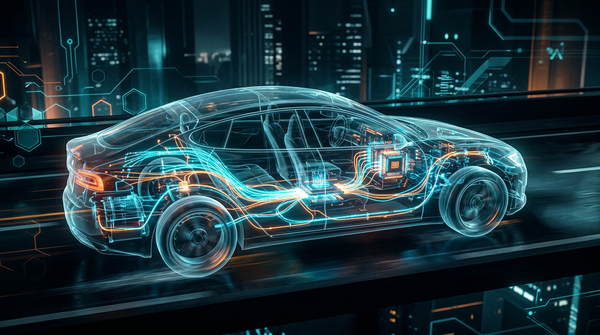
Safety in Physical AI isn't just about avoiding collisions; it involves a multi-layered architecture starting from the hardware root of trust and extending to the behavioral constraints of the AI agent. By 2035, with an estimated 49 million Level 3-5 autonomous vehicles and millions of collaborative robots in the workforce, the industry is moving toward "Safety at Every Layer." This means defining security requirements as engineering problems: enforceable controls, named owners, and verifiable evidence that protections are functioning in real-time.
Moreover, the concept of a 'HALO' (High-Assurance Layered Operations) approach ensures that even if one layer of the AI's decision-making process fails, redundant systems are in place to prevent catastrophic outcomes. As we push toward AGI in physical forms, the focus must shift from mere performance to the "un-engineering" of risk through systemic, deterministic safety protocols.
Source: NVIDIA Blog