Emergency Drive Away: Tesla’s New Safety Override for Critical Scenarios
Tesla has introduced an 'Emergency Drive Away' feature, allowing vehicles to disconnect and drive while plugged into a Supercharger during high-risk situations. This update follows safety concerns and highlights the evolving role of ADAS in occupant protection.
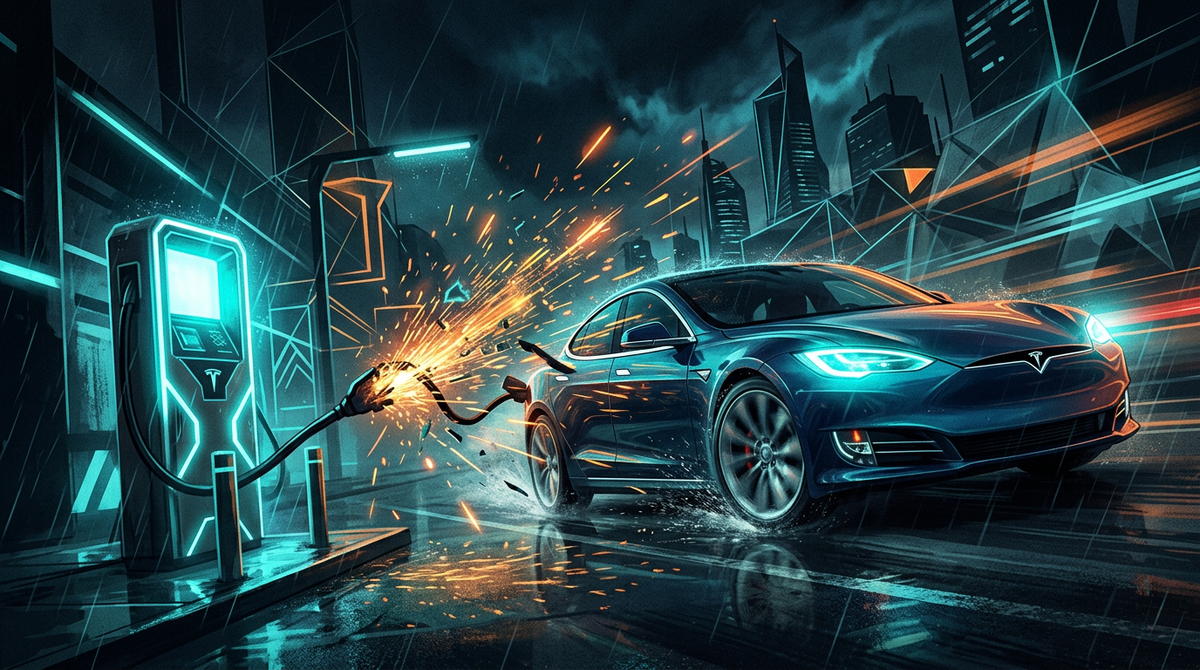
Tesla has officially rolled out a new safety feature dubbed "Emergency Drive Away," which allows a vehicle to instantly shift into drive and move even while a Supercharger cable is still physically connected. While electric vehicles typically have strict interlocks to prevent driving while plugged in—avoiding damage to the charging port and infrastructure—this update prioritizes human safety in extreme scenarios. The development follows a tragic shooting incident at a Supercharger station, which highlighted the vulnerability of drivers who are "tethered" to a fixed location while charging.
This feature represents a new direction for Advanced Driver Assistance Systems (ADAS). Traditionally, ADAS has focused on collision avoidance and lane-keeping; now, it is expanding into situational awareness and personal security. The system is designed to be used only in perceived emergencies, likely sacrificing the charging hardware to allow for a rapid escape. It raises interesting questions about the legal and insurance implications of intentional equipment damage in the name of safety.
Technically, this requires the vehicle's onboard computer to override standard safety protocols that check for "plug-in" status before engaging the drive units. It serves as a reminder that as vehicles become more software-reliant, the definition of "safety" can be updated overnight. For Tesla, this move is a pragmatic response to real-world threats, ensuring that the vehicle remains a mobile sanctuary even when it is most vulnerable during its refueling cycle.
Source: Electrek