Dynamic Dexterity: Humanoids Master Complex Motion and Tactile Sensing
Humanoid robots are moving beyond basic bipedal movement to master complex physical maneuvers like navigating monkey bars. These advancements in dynamic balance and upper-body coordination are pushing the boundaries of what robotic systems can achieve in disaster response and industrial settings.
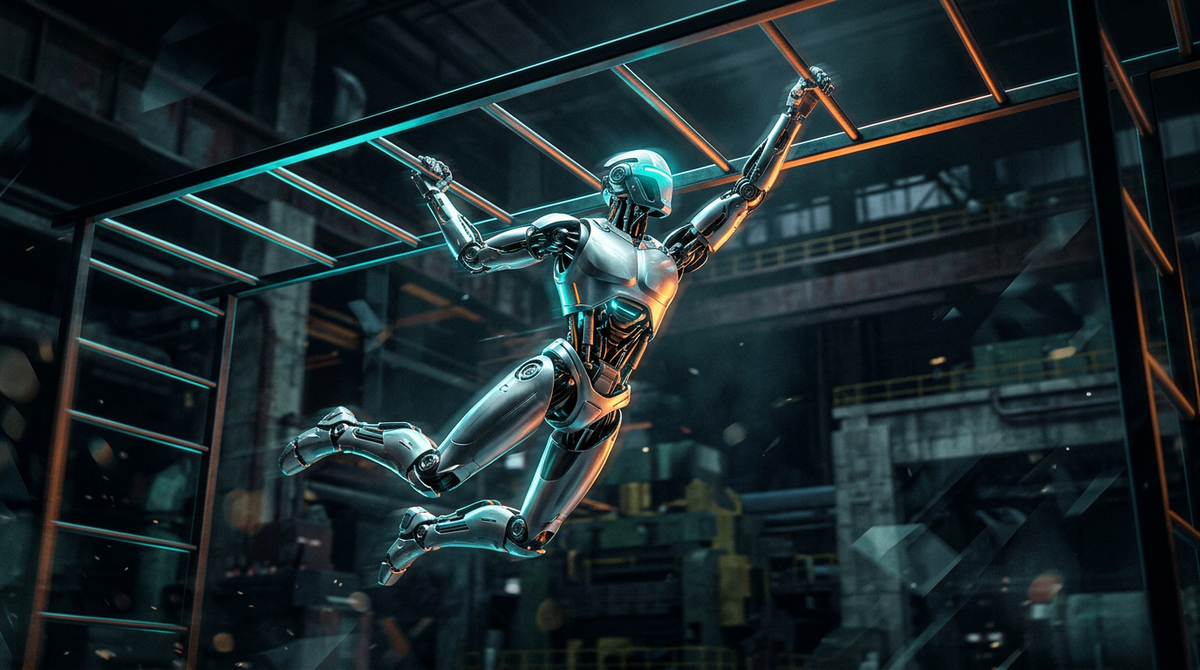
The latest breakthroughs in robotics are moving beyond the laboratory and into the realm of complex, dynamic motion. Recent demonstrations, including humanoids successfully navigating monkey bars, highlight a significant leap in robotic dexterity and coordination. This isn't just a parlor trick; mastering such movements requires the robot to manage shifting centers of gravity, grip strength, and momentum in real-time—challenges that have long plagued bipedal machines.
Furthermore, the integration of tactile sensing is transforming how robots interact with the world. A new focus on "feeling" allows robots to perform delicate tasks, such as drawing blood or handling fragile objects, with a level of precision previously reserved for humans. The Vitestro Aletta, for instance, is a specialized robot that uses near-infrared light to locate veins and autonomously perform blood draws, illustrating how specialized robotics can augment healthcare by taking over routine, high-precision procedures.
On a more experimental front, the development of "cyborg" insects—such as cockroaches equipped with electronic backpacks—shows the industry's exploration of hybrid systems for search-and-rescue operations. By combining the natural agility of biological organisms with electronic control, researchers are creating tools that can navigate rubble and tight spaces where traditional robots might fail. These diverse advancements across humanoids, medical bots, and bio-hybrids signify a new era of robotic utility.
Source: IEEE Spectrum