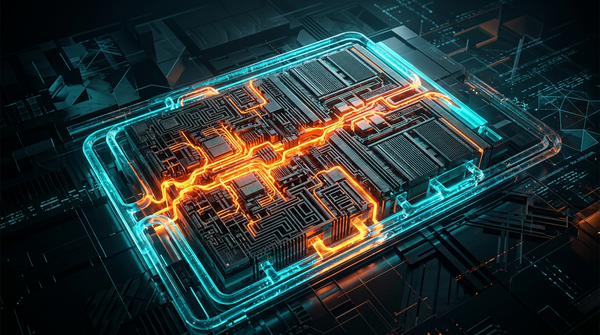
Beyond the GPU: The Rise of Heterogeneous AI Architectures
The future of AI compute is shifting away from monolithic chips toward heterogeneous clusters of CPUs, GPUs, and NPUs to solve power and cost constraints.

The semiconductor industry is reaching a tipping point where a single type of processor can no longer handle the burgeoning demands of AI. As the "AI Factory" becomes the new standard for industrial compute, the focus is shifting toward heterogeneous architecture. Data centers are increasingly being built from diverse clusters that mix CPUs, GPUs, and specialized NPUs (Neural Processing Units) to balance power consumption, token costs, and raw throughput.
This shift is driven by the reality that while GPUs excel at the massive parallel processing required for training, they are not always the most efficient for every stage of the AI pipeline. Specialized accelerators and custom silicon are emerging to handle specific tasks like inference or vector database management. Furthermore, the rise of chiplets and advanced packaging is allowing manufacturers to mix and match different technologies on a single substrate, optimizing for specific workloads without the cost of a massive monolithic die.
Interconnects and software orchestration are the new battlegrounds. As clusters become more diverse, the ability to move data efficiently between different chip types—often using silicon photonics—becomes critical. The winner in the next phase of the semiconductor race won't just be the company with the fastest chip, but the one that provides the most flexible and energy-efficient ecosystem for orchestrating intelligence across a varied hardware landscape.
Source: Semiconductor Engineering