Beyond Text: Why Video Games are the Secret to Physical AGI
A Bezos-backed startup suggests that the key to Artificial General Intelligence (AGI) lies not in text, but in the complex, physics-based environments of video games. By training models on gaming data, researchers hope to bridge the gap between digital logic and physical reality.
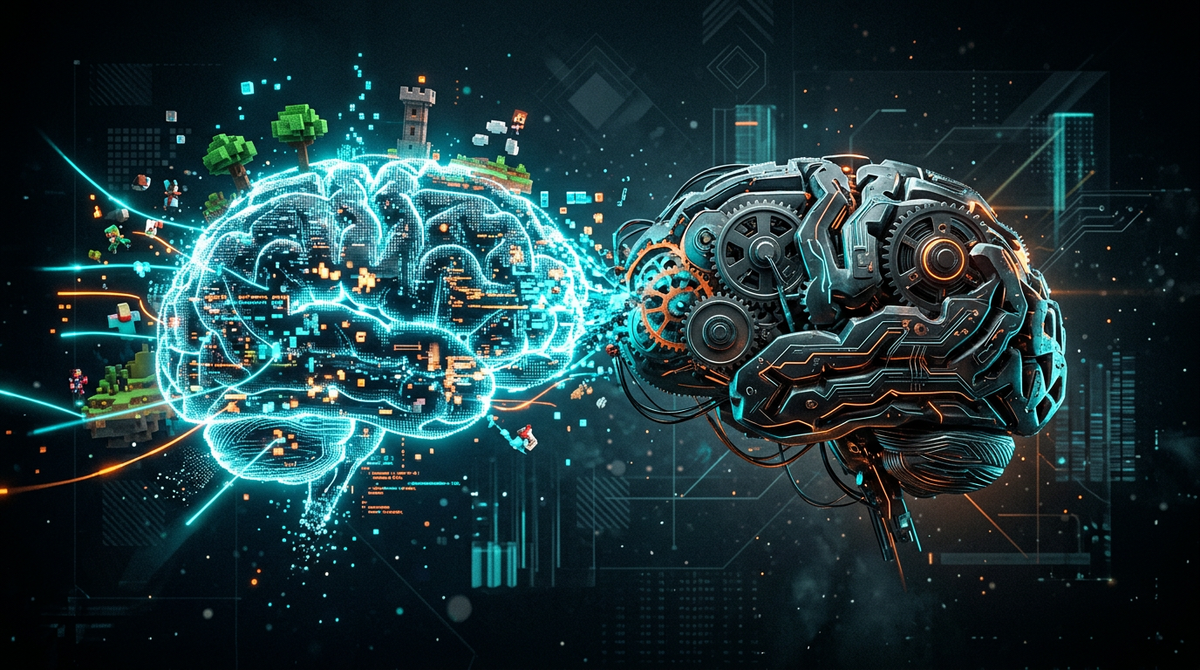
Gaming Data: The New Frontier for Physical Intelligence
For years, the pursuit of Artificial General Intelligence (AGI) has been dominated by Large Language Models (LLMs) like ChatGPT and Claude. However, a growing cohort of researchers and startups, backed by heavyweights like Jeff Bezos, argues that text alone is insufficient. The missing link is "physicality"—the ability of an AI to understand and navigate the 3D world. The proposed solution? Training AI on the vast troves of data generated by video games.
Unlike the static nature of the internet's text, video games provide a rich, interactive environment where actions have immediate physical consequences. Whether it is a character navigating a complex terrain or a vehicle responding to momentum and friction, games simulate the laws of physics in a way that text never can. This data allows AI models to learn cause-and-effect relationships, spatial reasoning, and real-time decision-making.
This shift toward "Physical AI" suggests that the next generation of intelligence won't just be able to write a poem; it will understand how to move through a room or manipulate an object. By leveraging the millions of hours of human-inputted gaming data, startups are creating a foundation for AI that can eventually transition from the digital screen to physical robotic embodiments. The goal is a unified model of the world that respects the constraints of reality, moving us closer to machines that can truly interact with the physical environment as humans do.
Source: TechCrunch