Beyond Silicon: 2D CFETs and the Future of Low-Power Computing
New research into single-crystal high-κ dielectrics is paving the way for ultra-low-power 2D CFETs, promising a new leap in semiconductor efficiency.
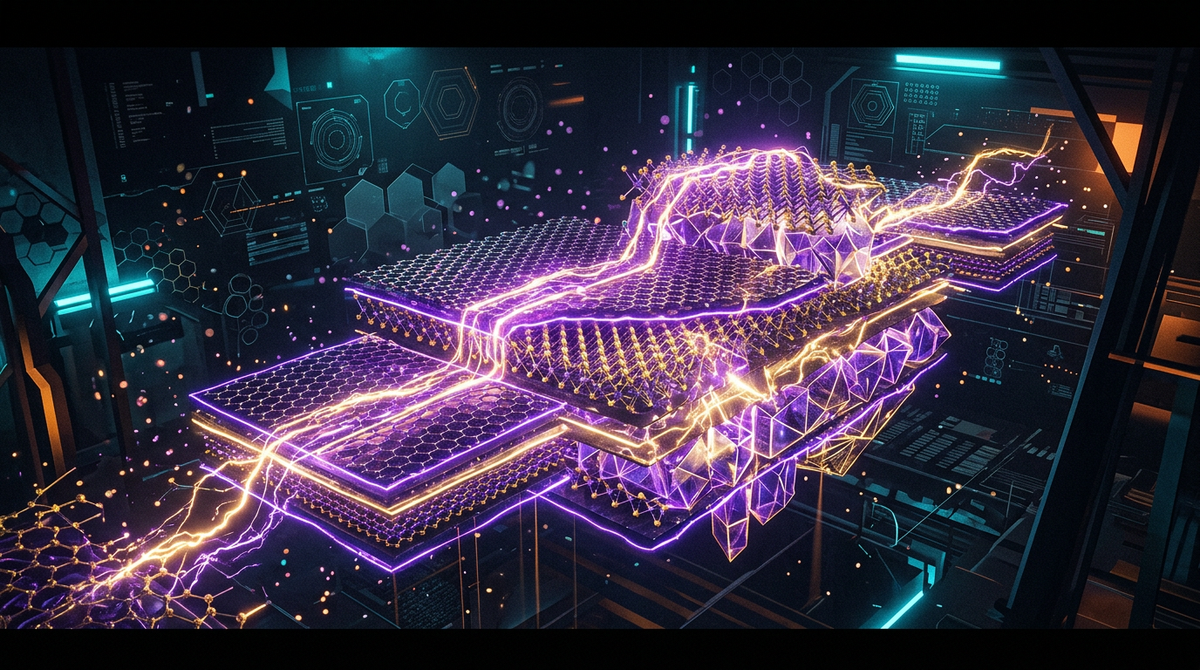
As Moore’s Law faces increasing physical hurdles, the semiconductor industry is looking beyond traditional silicon structures. Researchers at the National University of Singapore have recently demonstrated a breakthrough using single-crystal high-κ dielectrics to enable low-power 2D Complementary Field-Effect Transistors (CFETs).
The move to 2D materials, such as transition metal dichalcogenides, offers the potential for thinner channels and better electrostatic control. However, the interface between these 2D materials and traditional dielectrics has often been a source of power leakage and performance degradation. By utilizing a single-crystal dielectric, the researchers have managed to create an atomically smooth interface that significantly reduces these inefficiencies.
This development is crucial for the next generation of AI accelerators and mobile processors. As AI models grow in complexity, the energy cost of computing becomes a limiting factor. 2D CFETs represent a potential pathway to sustaining performance gains while drastically lowering the thermal and power envelope of high-performance chips. If successfully commercialized, this technology could define the post-silicon era of semiconductor design.
Source: Semiconductor Engineering