Beyond Navigation: SDVs Must Solve the 'Emergency Responder' Crisis
The Software-Defined Vehicle (SDV) era is facing its first major regulatory hurdle as the NHTSA demands that autonomous systems stop treating emergency scenes as 'edge cases.'
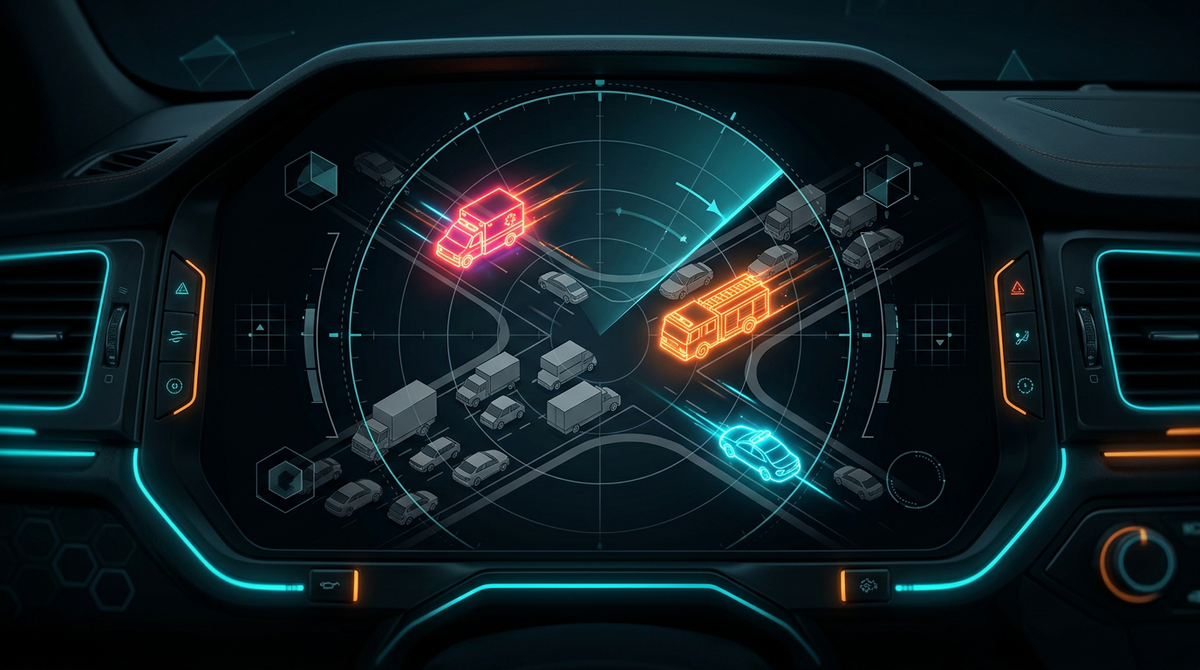
In the world of Software-Defined Vehicles (SDV), the ability to push over-the-air (OTA) updates is often touted as the ultimate solution for fixing bugs. However, recent federal interventions highlight a critical flaw in current SDV logic: the failure to prioritize emergency responders. The National Highway Traffic Safety Administration (NHTSA) has issued a stern warning to AV companies, stating that emergency scenes are not "edge cases" but expected roadway conditions.
This regulatory shift follows a series of incidents where autonomous vehicles interfered with fire trucks and ambulances. For the SDV architect, this represents a fundamental requirement change. It is no longer enough for the software to identify a "truck"; it must distinguish between a stationary vehicle and an active emergency site characterized by flashing lights, smoke, and unique human hand signals. Zoox recently issued a software recall after its robotaxis became "confused" by heavy smoke, proving that the sensory-fusion layers of current SDVs are still struggling with environmental volatility.
The "software" in SDV must now evolve from passive navigation to active social cooperation. This means building specific protocols into the vehicle's core operating system that automatically yield, pull over, or communicate with first responders. As regulators tighten the screws, the maturity of an SDV platform will be measured by its ability to handle these high-stakes social interactions, not just its ability to stay in a lane.
Source: TechCrunch