Beyond LLMs: Why Gaming Data is the New Frontier for Physical AI
Moving beyond text-based LLMs, startups are now using high-fidelity video game environments to train 'Physical AI' that understands the nuances of the real world. This shift could be the key to achieving Artificial General Intelligence by teaching machines spatial reasoning and physical interaction.
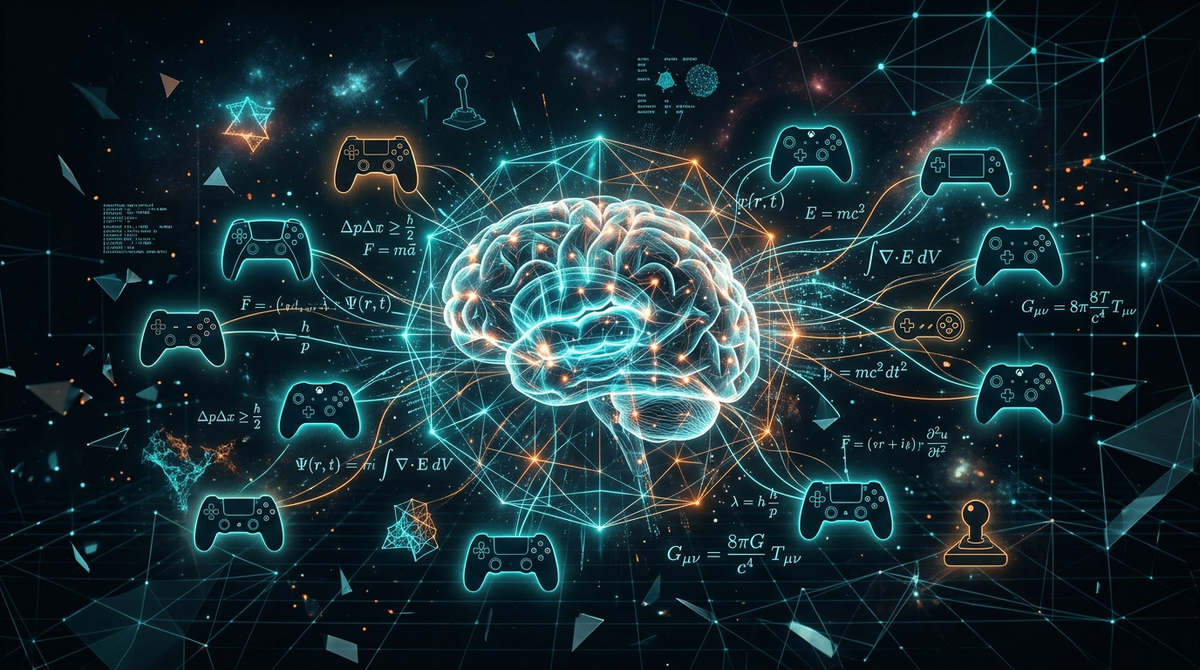
The quest for Artificial General Intelligence (AGI) is undergoing a fundamental shift in strategy. While Large Language Models (LLMs) like ChatGPT have demonstrated remarkable prowess in processing and generating text, many experts argue they lack the 'grounded' understanding necessary to interact with the physical world. The new frontier is Physical AI—systems that don't just talk about the world but understand its physics, constraints, and causal relationships.
Leading startups, including those backed by Jeff Bezos, are now looking toward gaming data as the ultimate training set for this next generation of intelligence. Unlike the internet, which is a repository of human-written symbols, video games provide a structured, physics-based environment where AI agents must navigate, solve puzzles, and react to dynamic stimuli in real-time. By training on millions of hours of gameplay, these models learn "spatial intelligence"—the ability to predict how objects move and how forces interact.
This approach addresses a critical bottleneck in AI development: data quality. The internet's text is finite and often contradictory. In contrast, high-fidelity gaming environments offer a nearly infinite stream of synthetic and human-generated data that reflects the laws of physics. For Un-Engineering, this represents the crucial bridge between abstract silicon intelligence and the embodied robotics of the future. If a model can master the complex physics of a modern game engine, it is one step closer to navigating a crowded city street or operating a robotic arm in a warehouse.
Source: TechCrunch