Beyond LLMs: The Rise of Agentic Foundation Models in Physical AI
While LLMs have dominated headlines, the next frontier is 'Agentic Robotics,' where foundation models learn to navigate space and time. Startups like General Intuition are now reaching multibillion-dollar valuations to bridge the gap between digital reasoning and physical action.
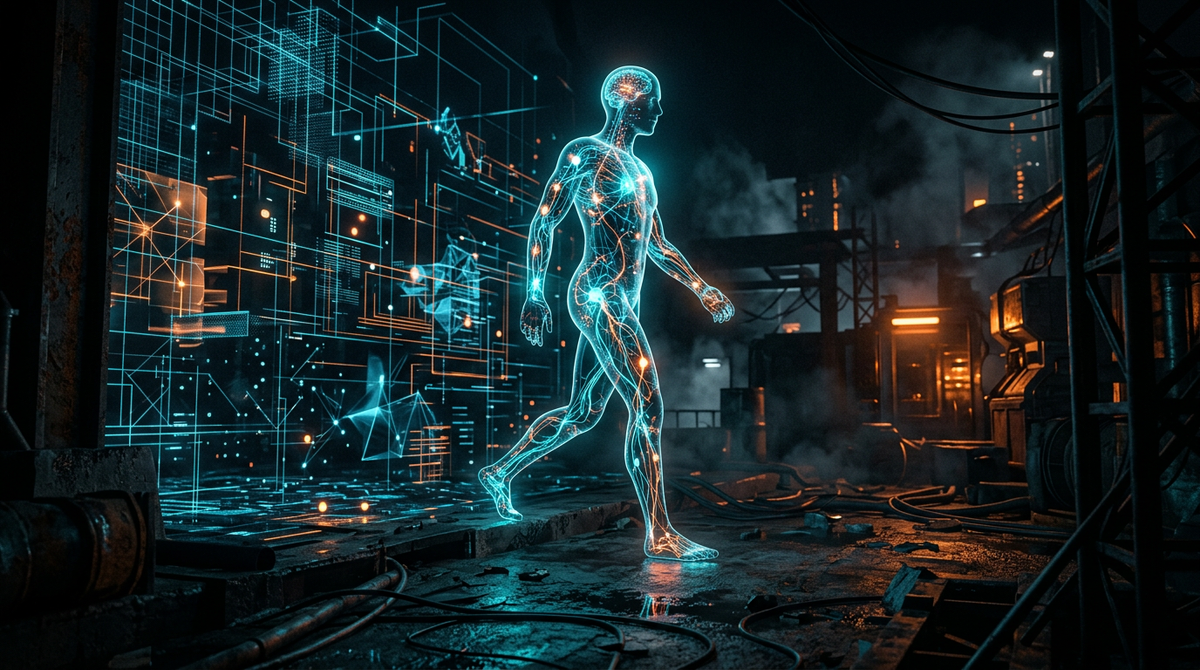
For the past two years, the AI narrative has been dominated by Large Language Models (LLMs) that process text and images. However, a new shift is occurring toward "Physical AI"—systems that don't just think, but act. The emergence of agentic robotics represents a departure from hard-coded automation toward foundation models that understand the nuances of physical environments. This transition is being fueled by massive capital inflows, as evidenced by General Intuition’s recent push toward a $6 billion valuation.
The core challenge of Physical AI is the 'data-scaling' problem. Unlike text-based AI, which can scrape the internet for trillions of tokens, robots require high-fidelity data of physical interactions. Companies are now looking beyond human demonstrations, utilizing synthetic data from physics-based simulations and even video game engines to teach AI agents how to move through complex 3D spaces. This 'General Intuition' allows a robot to anticipate gravity, friction, and spatial constraints without needing a pre-programmed script for every specific task.
As these models mature, we are moving away from the 'Lego era' of robotics—where we focused on individual actuators and sensors—and into the era of integrated intelligence. The goal is a unified architecture where the 'brain' of the machine can be deployed across various form factors, from humanoid industrial workers to autonomous delivery systems, marking the true arrival of AI in the tangible world.
Source: TechCrunch