Beyond Edge Cases: Regulators Demand AVs Respect the Siren
Federal regulators are cracking down on autonomous vehicles, insisting that emergency scenes are not 'edge cases' and demanding better integration with first responders.
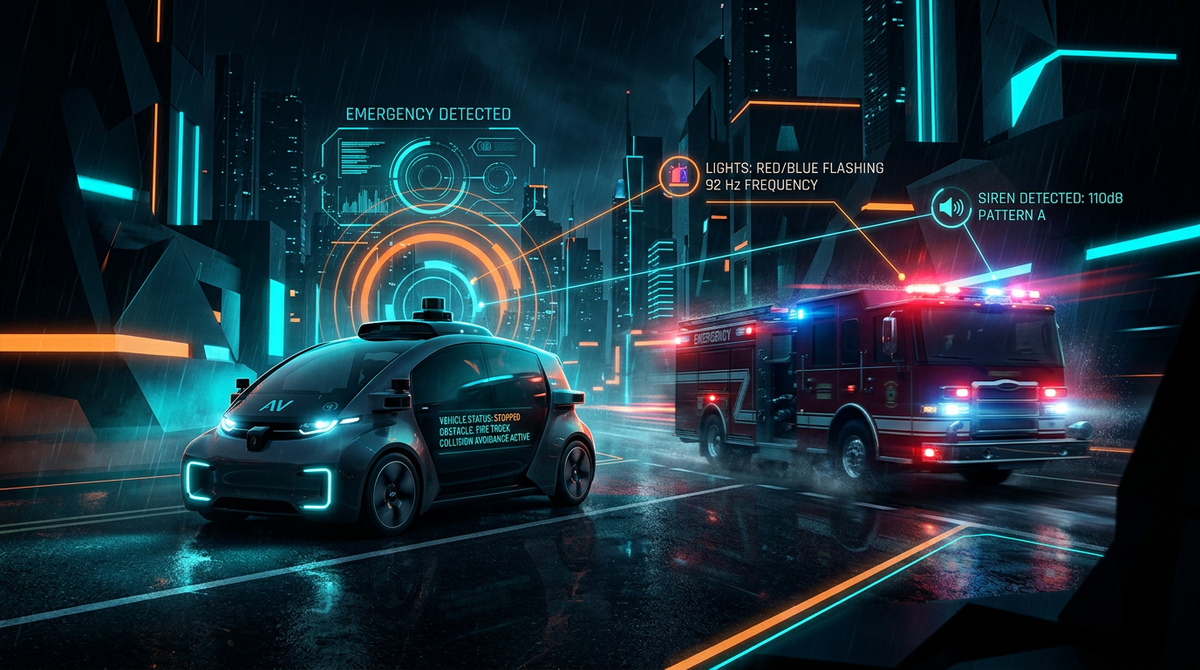
The National Highway Traffic Safety Administration (NHTSA) has issued a stern warning to the autonomous vehicle industry: emergency responder scenarios can no longer be treated as rare "edge cases." This directive follows several high-profile incidents where AVs obstructed ambulances and fire trucks, leading to a mandatory software recall for Zoox after its robotaxis were reportedly confused by heavy smoke at an emergency scene.
Advanced Driver Assistance Systems (ADAS) and full autonomy must now prioritize the recognition of sirens, flashing lights, and the erratic movements of first responders. The technical challenge is significant; traditional computer vision models often struggle with the chaotic environment of an accident site, where flares, smoke, and hand signals from police officers replace standard traffic lights and lane markings.
This regulatory push is forcing a shift in how ADAS developers train their perception stacks. The industry is being pushed toward "proactive" safety, where the vehicle doesn't just react to obstacles but anticipates the needs of emergency services. For the public to trust autonomous systems, these vehicles must behave as "good citizens" on the road, demonstrating that they can handle the most critical and unpredictable moments of urban life with the same level of care as a human driver.
Source: TechCrunch