Beyond Driving: Tesla’s V2L Upgrade Redefines the Software-Defined Vehicle
Tesla’s latest Model 3 refresh in China introduces a 16-inch screen and Vehicle-to-Load capabilities, signaling a move toward vehicles as mobile power hubs. The software-defined architecture allows for rapid hardware-software integration that outpaces Western counterparts.
Tesla has unveiled a significant upgrade for the Model 3 in the Chinese market, featuring a larger 16-inch infotainment screen and, more importantly, Vehicle-to-Load (V2L) capabilities. The V2L feature allows the vehicle to export up to 2.2 kW of AC power, effectively turning the car into a mobile battery for appliances and camping gear. This move underscores the evolution of the Software-Defined Vehicle (SDV) into a versatile energy asset.
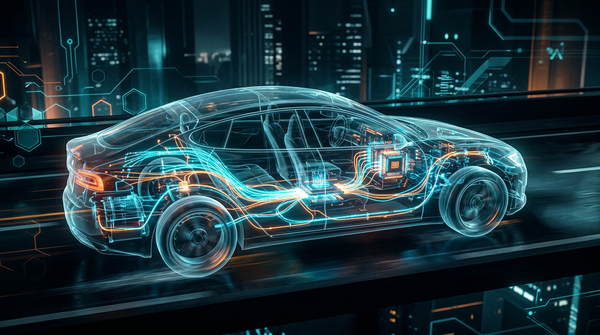
The disparity between Tesla’s Chinese and American offerings highlights the competitive pressure in the Asian market, where SDV features are a primary differentiator. By integrating high-power export directly into the vehicle's electrical architecture, Tesla is expanding the utility of the EV beyond transportation. This requires a sophisticated Power Distribution Unit (PDU) that can be managed via software, allowing for precise control over energy discharge and battery health monitoring.
For the un-engineering community, this represents a shift in how we define "vehicle performance." It is no longer just about 0-60 times; it is about the vehicle’s ability to act as a node in a larger energy ecosystem. As SDVs become more common, the integration of bidirectional charging and high-fidelity interfaces will become the new baseline for consumer expectations.
Source: Electrek