Autonomous Undersea Strikes and the Global Race for Super Intelligence
The U.S. and U.K. have achieved a historic first by firing a torpedo from an uncrewed submarine, signaling a major shift toward autonomous undersea warfare. Meanwhile, global powers continue to test the limits of hypersonic and drone technology.
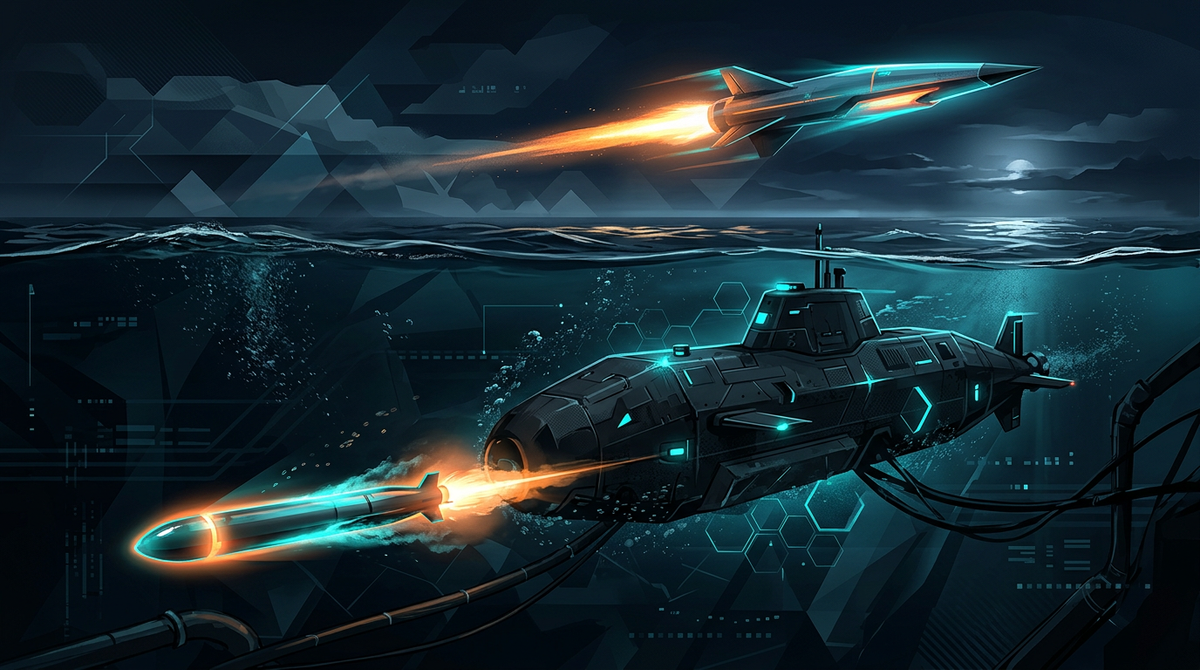
The landscape of modern warfare is being reshaped by the integration of autonomous systems across all domains. In a landmark achievement for neo-defense tech, the United States and the United Kingdom successfully fired a torpedo from an uncrewed underwater vehicle (UUV) for the first time. This capability represents a significant tactical leap, allowing for stealthy, long-endurance maritime strikes without risking human crews. These uncrewed submarines can fill critical gaps in traditional naval coverage, providing a persistent presence in contested waters.
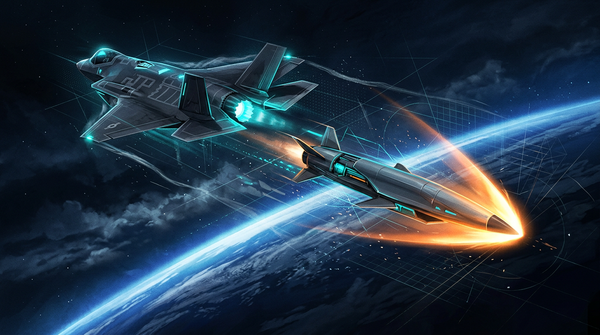
While undersea autonomy advances, the aerial domain remains a hotbed of technological competition and risk. Japan recently lost a third of its Global Hawk fleet when a high-altitude drone crashed into the Sea of Japan, highlighting the operational fragility of these sophisticated platforms. Meanwhile, North Korea continues to push the boundaries of missile technology with the test of the Hwasong-11Ma, a new hypersonic missile. Although the weapon's operational readiness is questioned by analysts, the test underscores the rapid proliferation of high-speed, maneuverable threats that traditional defense systems struggle to intercept.
The shift toward 'Super Intelligence'—a new term being adopted by U.S. agencies—also brings significant ethical and operational challenges. Critics warn that AI military targeting may soon move faster than human operators can authenticate, potentially leading to unintended escalations. As nations like Poland plan their own satellite constellations to mimic the resilience of Starlink, the race for autonomous superiority is moving into orbit. The future of defense is no longer just about firepower, but about the speed, autonomy, and resilience of the underlying AI networks.
Source: The Drive / TWZ