Agentic Autonomy: Isaac ROS 5.0 and the Future of Reasoning Robots
The launch of NVIDIA Isaac ROS 5.0 marks a significant leap for 'agentic' robotics. By integrating foundation models with the open-source ROS framework, developers can now build robots that perceive and reason in real-time.
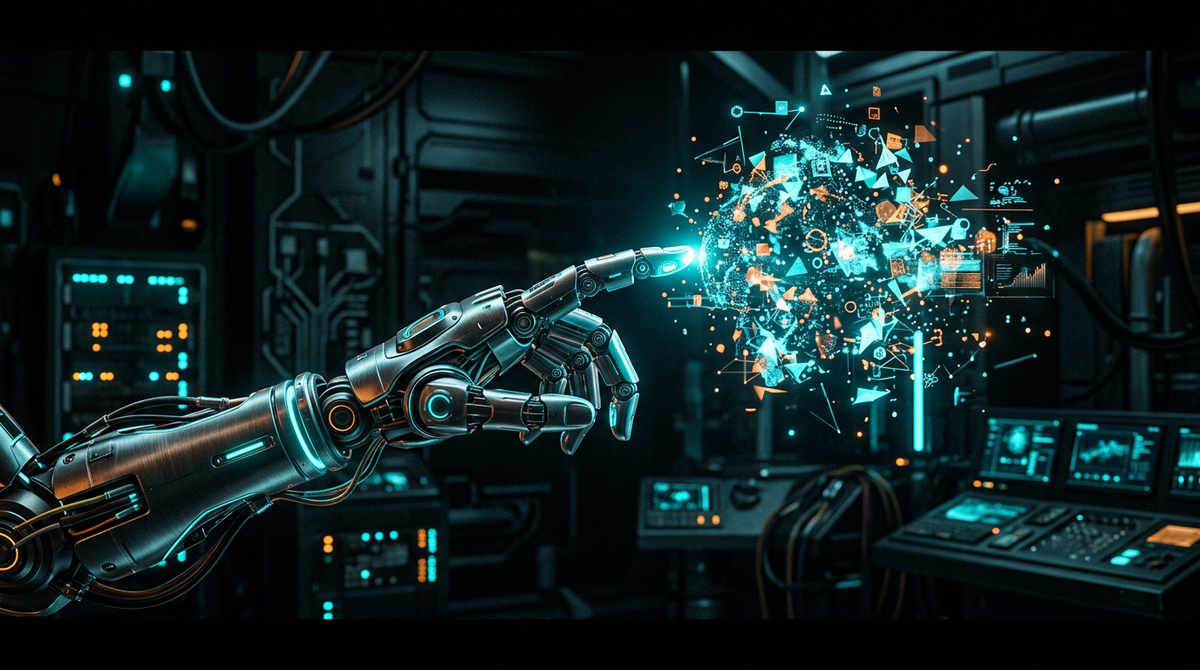
Robotics is moving from simple automation to "agentic" behavior, where machines can not only follow instructions but also reason about their environment to complete complex tasks. The release of NVIDIA Isaac ROS 5.0 is a catalyst for this shift, providing developers with a suite of tools that bridge the gap between high-level AI reasoning and low-level robotic control.
At the heart of this advancement is the integration of physical AI foundation models. These models allow robots to understand spatial relationships and object properties in ways that were previously impossible. For example, a robot equipped with Isaac ROS 5.0 can navigate a dynamic warehouse, identifying not just the location of an obstacle, but its nature—recognizing that a cardboard box can be pushed, while a glass partition must be avoided.
The open-source nature of the ROS framework ensures that these advancements are accessible to the wider robotics community. By providing optimized kernels for NVIDIA hardware, the new release allows for real-time perception and motion planning with minimal latency. This is particularly crucial for the new generation of humanoid robots, such as Digit 5, which require immense computational power to maintain balance and safely interact with human coworkers. As these tools become more sophisticated, we are entering an era where robots will transition from tools to autonomous partners in the workplace.
Source: NVIDIA Blog