Red-Teaming Autonomy: Stress-Testing ADAS in the Virtual Trenches
Laplace Intelligence is revolutionizing vehicle safety by 'red-teaming' autonomous systems in hyper-realistic simulations. By using AI agents to create edge-case scenarios, they ensure ADAS and self-driving stacks are ready for the chaos of the real world.
Traditional testing for Advanced Driver Assistance Systems (ADAS) often relies on predictable mileage and standard safety protocols. However, Laplace Intelligence, a spinout from the University of Michigan, argues that this isn't enough. They are pioneering a "red-teaming" approach to vehicle safety, using AI agents to actively look for weaknesses in autonomous driving software before it ever touches public asphalt.
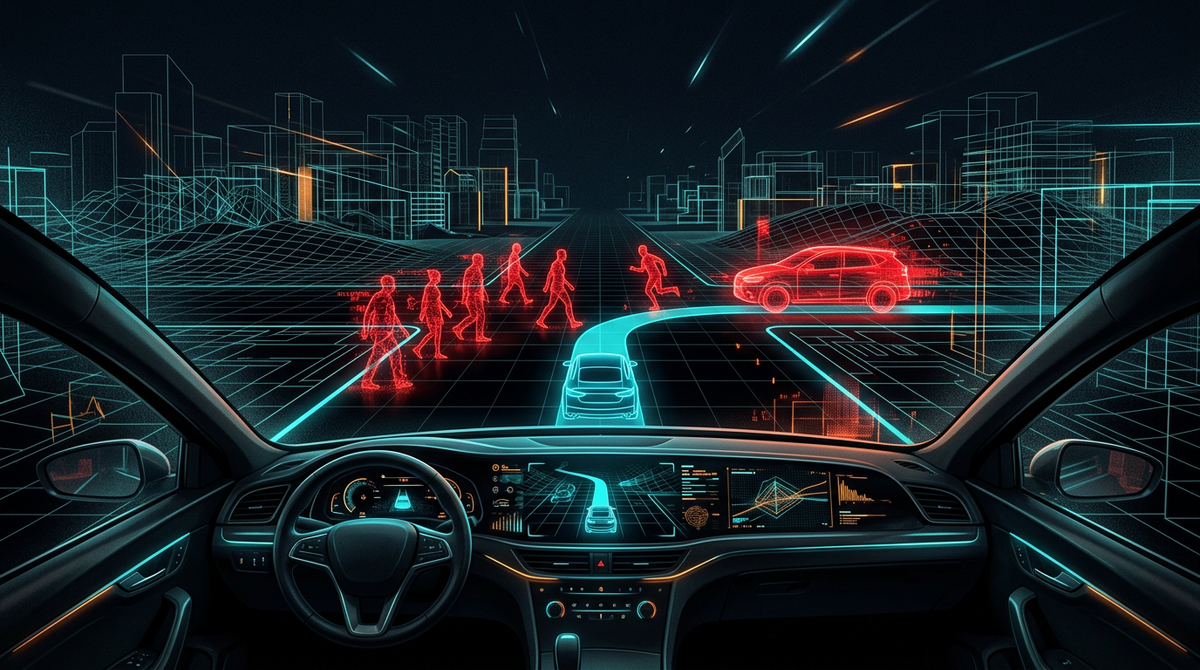
The core of Laplace’s technology is an interactive simulation environment where AI-driven "antagonists"—pedestrians, other drivers, and even cyclists—behave in unpredictable or dangerous ways to see how the ADAS responds. This method identifies the "unknown unknowns": those rare but catastrophic edge cases that are nearly impossible to encounter during standard road testing. By stress-testing these systems in a virtual world, developers can patch vulnerabilities in the perception and planning layers of the vehicle stack.
This approach is becoming critical as ADAS moves from simple lane-keeping to more complex urban navigation. If a vehicle's safety functions can be "tricked" by a deceptive sensor input or a bizarre traffic maneuver, the consequences are fatal. Laplace’s platform provides a sandbox for engineers to verify that their safety functions are robust not just in theory, but against a motivated, simulated adversary.
Source: TechCrunch