Agentic AI: Breaking Through the 'Lego Era' of Robotics
Robotics is currently in its 'Lego era,' but the arrival of agentic AI and foundation models for movement promises to finally solve the industry's long-standing data-scaling problem.
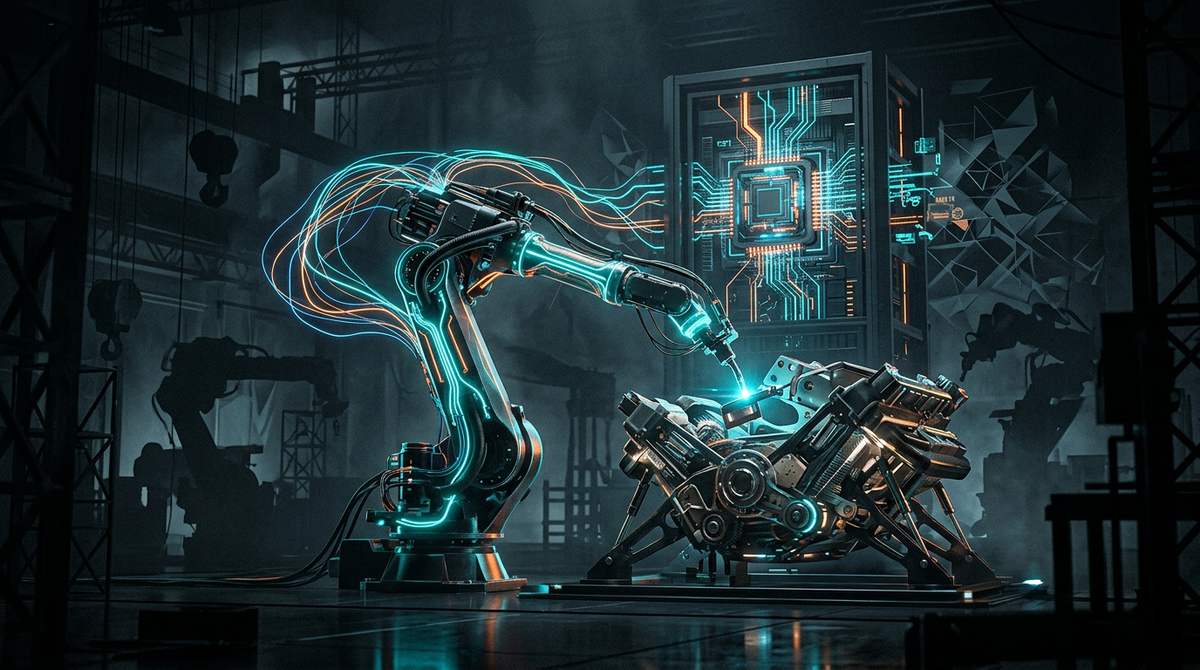
Despite years of hype, robotics has yet to experience its "ChatGPT moment." According to industry insiders, we are currently navigating the "Lego era" of robotics—a period defined by the assembly of basic building blocks like actuators, sensors, and compute modules, but lacking a unifying "brain" capable of generalized intelligence. However, the rise of Agentic Robotics may be about to change that.
The core challenge has always been data. While LLMs can scrape the internet for trillions of words, robots require physical demonstration data, which is expensive and slow to collect. Agentic AI shifts the paradigm by allowing robots to "reason" through tasks and plan their own actions rather than following rigid scripts. By utilizing foundation models that understand physics and spatial relationships, robots can begin to learn from smaller datasets and generalize their skills across different environments.
We are seeing massive investments into startups like General Intuition, which recently hit a $6 billion valuation, focused specifically on teaching AI agents how to move through space. If these agentic models succeed, the "Lego era" will end, giving way to a new generation of robots that can be deployed in unstructured environments—from warehouses to homes—without needing to be programmed for every specific motion.
Source: IEEE Spectrum