Why Electronics Digital Twins Are the North Star for Software-Defined Vehicles
As vehicles evolve into rolling computers, digital twins are becoming essential tools for simulating the complex electronic architectures of Software-Defined Vehicles.
Bridging the Gap Between Silicon and Steel
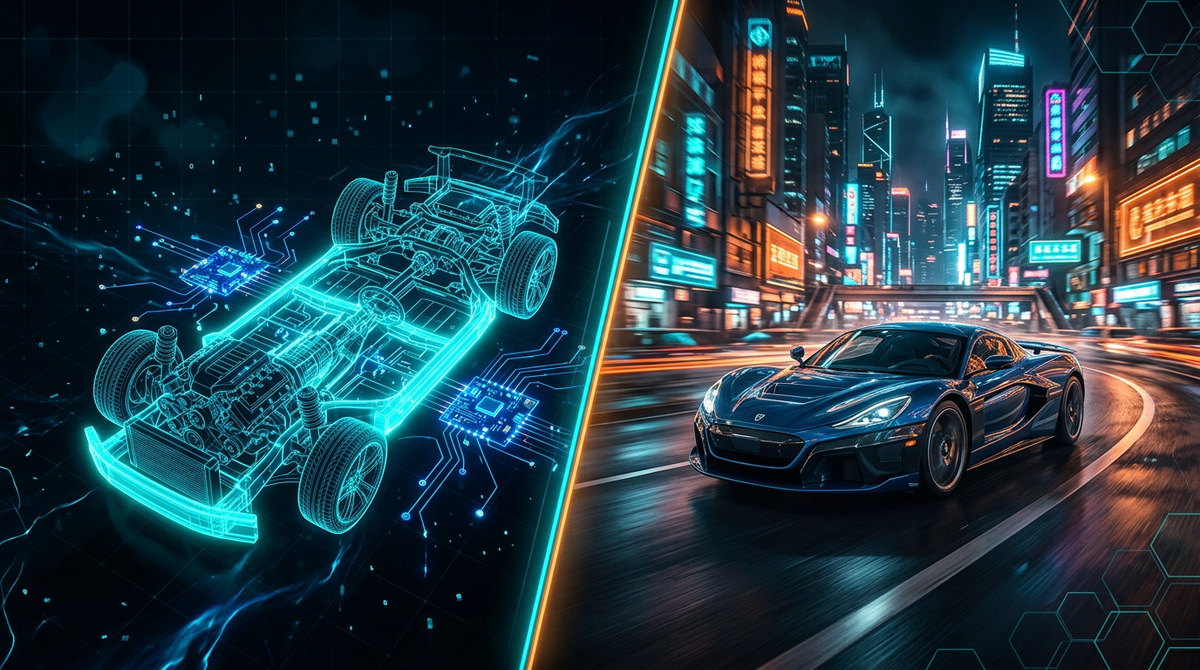
The transition to Software-Defined Vehicles (SDVs) has fundamentally changed the automotive lifecycle. Traditionally, physical prototypes were built to test components. Today, that process is too slow for the pace of software development. Enter the "Electronics Digital Twin"—a highly granular simulation that encompasses not just the vehicle's shape, but the precise behavior of its chips, ECUs, and communication buses.
The emergence of these twins allows engineers to begin "driving" a car in virtual environments before a single piece of metal is stamped. Because SDVs rely on continuous over-the-air (OTA) updates, the digital twin serves as a permanent reference model. If a software patch causes a bug in a specific infotainment system or ADAS sensor on a specific hardware revision, the twin can replicate the failure in a safe, virtual sandbox.
Furthermore, these digital twins are becoming more sophisticated, incorporating power profiles and thermal characteristics of the vehicle's silicon. This is vital for electric vehicles, where every milliwatt used by the onboard computer represents a loss in range. By optimizing the electronic digital twin, manufacturers are ensuring that the software-defined car of tomorrow is as reliable as the mechanical car of yesterday.
Source: Semiconductor Engineering