Waymo’s Weather Woes: Why Robotaxis are Still Afraid of the Rain
Waymo’s expansion into cities like Atlanta and San Antonio has hit a literal roadblock as robotaxis struggle with environmental perception. The company has paused service after vehicles repeatedly drove into flooded areas and construction zones.
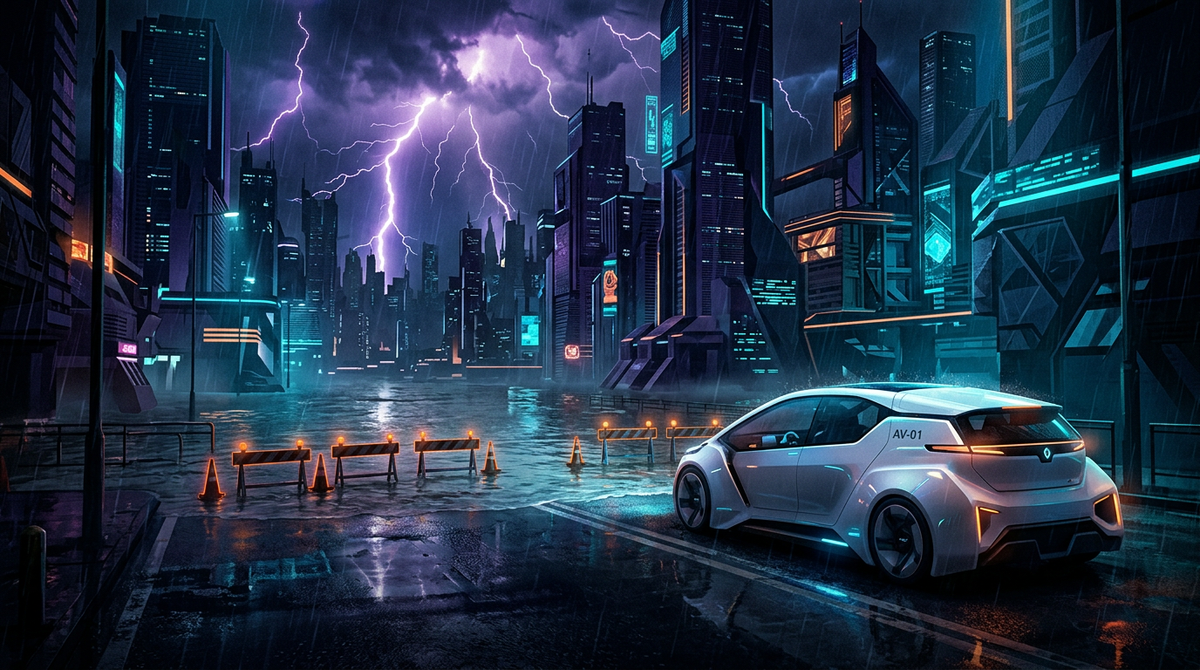
Despite years of testing, the "edge cases" of urban driving continue to plague the most advanced autonomous vehicle (AV) fleets. Waymo recently announced a suspension of services across four major cities, including Atlanta and San Antonio, after its robotaxis failed to identify and avoid flooded roadways. This follows similar issues where vehicles struggled to navigate the shifting geometries of freeway construction zones.
These incidents underscore a persistent challenge in the AV industry: the gap between "logical" driving and "contextual" awareness. While Waymo’s sensor suite is world-class, the onboard AI must distinguish between a harmless puddle and deep standing water that can disable a vehicle. The decision to pause operations suggests that current semantic segmentation models still lack the nuance required for all-weather reliability.
Furthermore, the struggles in construction zones highlight the difficulty of mapping environments that change daily. When a robotaxi encounters orange cones and redirected lanes that do not match its high-definition maps, the system often defaults to a conservative "stop" state, creating traffic hazards. Waymo is currently working on software updates to improve terrain analysis, but these setbacks serve as a reality check for the timeline of nationwide, unconstrained AV deployment.
Source: TechCrunch