The Vision Gap: Why Atmospheric Interference Remains the Achilles' Heel of ADAS
A new recall from Zoox highlights the persistent gaps in ADAS and autonomous vision systems when faced with non-standard atmospheric conditions like smoke.
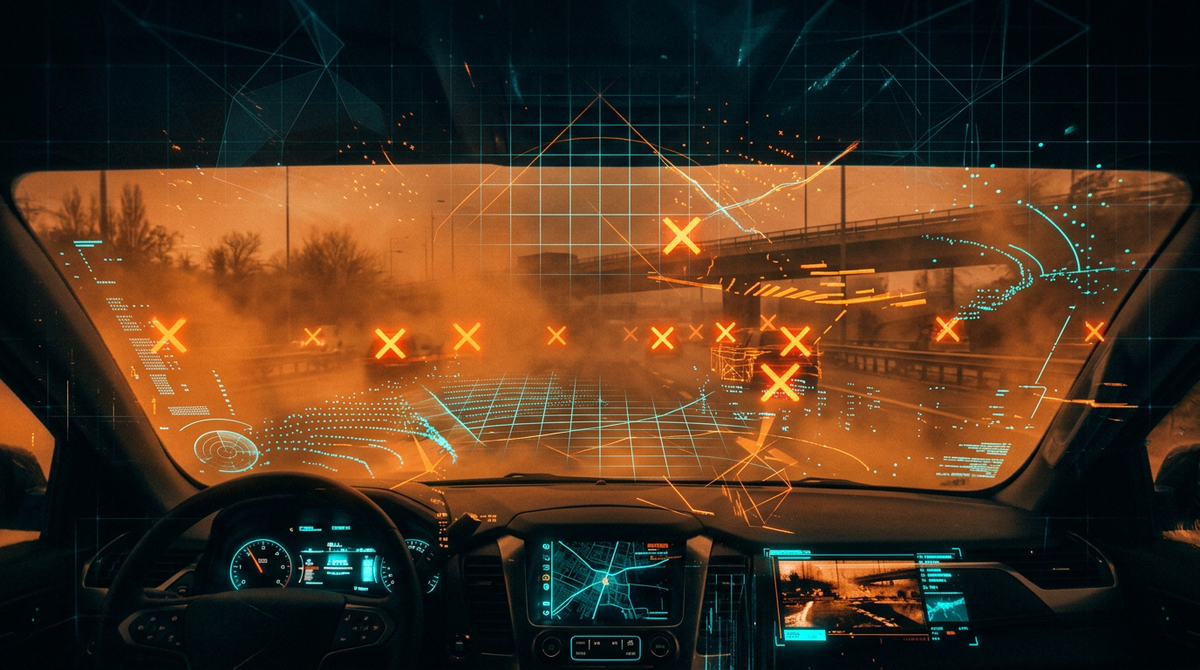
Modern Advanced Driver Assistance Systems (ADAS) have made incredible strides in object detection, but a recent recall by Zoox underscores a lingering vulnerability: atmospheric interference. A Zoox robotaxi recently failed to navigate correctly when confronted with heavy smoke, leading to a software recall that has put the industry on notice. This incident serves as a critical case study for ADAS engineers working on perception stacks.
Most ADAS and autonomous systems rely on a combination of LiDAR, cameras, and radar. While LiDAR is excellent for precision, it can struggle with "soft" obstacles like smoke, steam, or heavy fog, which reflect light in ways that can mimic solid objects or obscure them entirely. The Zoox failure suggests that the sensor fusion logic—the part of the software that decides which sensor to believe—was unable to reconcile the conflicting data points caused by the smoke.
To move toward safer ADAS, the next generation of perception software must incorporate "semantic understanding" of environmental hazards. This involves training neural networks not just to see pixels, but to understand the physical properties of what they are seeing. If a system can identify "smoke" as a transient gas rather than a concrete wall, it can adjust its braking and path-planning behavior accordingly. This recall is a reminder that the path to full autonomy requires solving the hardest 1% of environmental conditions.
Source: TechCrunch