The Silicon Architect: How AI Agents are Verifying the Software-Defined Vehicle
Software-Defined Vehicles (SDVs) are evolving through advanced AI-driven verification, allowing manufacturers to simulate and validate complex software architectures before a single bolt is tightened. This shift enables faster deployment of over-the-air updates and higher system reliability.
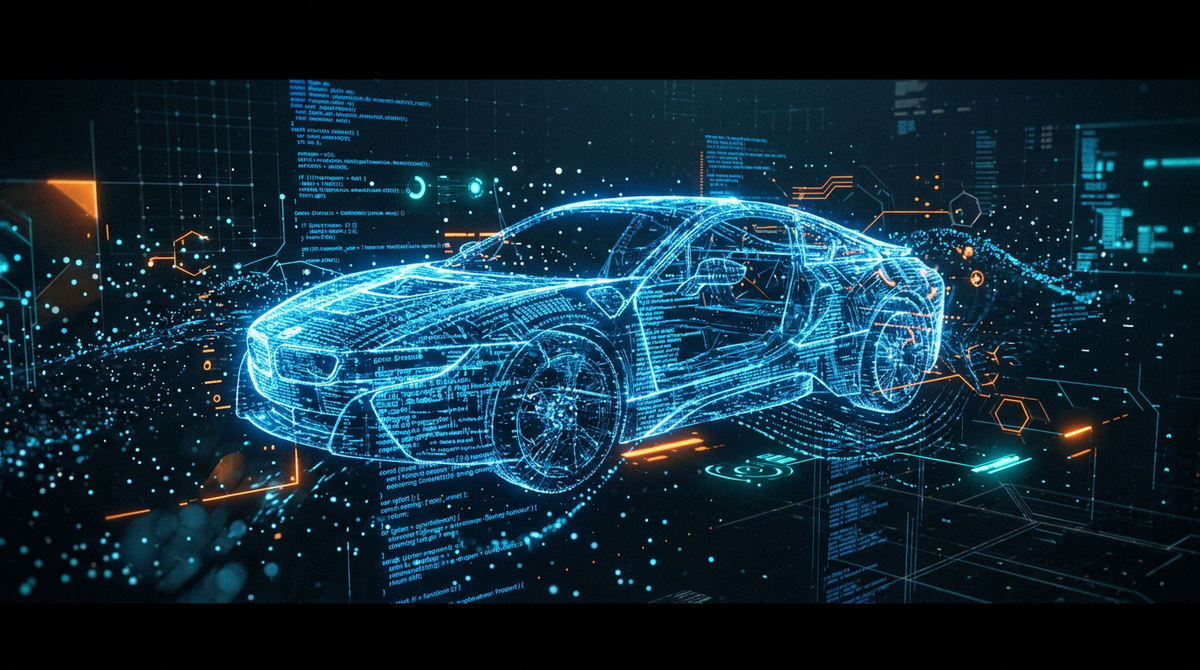
The modern vehicle is no longer a mechanical machine with some computers inside; it is a complex software platform on wheels. As the industry moves toward the Software-Defined Vehicle (SDV) paradigm, the primary challenge has shifted from mechanical durability to software verification. The rise of "Agentic Verification" is revolutionizing how automakers manage the millions of lines of code required for modern mobility.
By using AI agents to verify designs, manufacturers can identify conflicts in the vehicle's middle-ware and application layers much earlier in the development cycle. These autonomous agents can run billions of permutations, checking how a new infotainment update might interact with safety-critical brake controllers. This level of automated scrutiny is the only way to manage the exponential complexity inherent in SDVs, where a single software bug can have physical consequences.
Furthermore, the move toward SDVs allows for "continuous improvement" through over-the-air (OTA) updates. This means a car can actually get safer or more efficient over time. However, this flexibility requires a robust digital twin infrastructure. By ensuring that the software "brain" of the vehicle is verified in a virtual environment that mirrors its physical counterpart, automakers can guarantee that the software-defined features—from battery management to autonomous lane changes—remain secure and reliable throughout the vehicle's lifecycle.
Source: Semiconductor Engineering