The Rise of the Practical Humanoid: Beyond the Robotics Hype Cycle
Toyota and Walden Robotics are collaborating to bring practical humanoid robots to the market, moving away from purely experimental 'hype' projects. The partnership aims to solve real-world labor shortages through versatile, human-shaped machines.
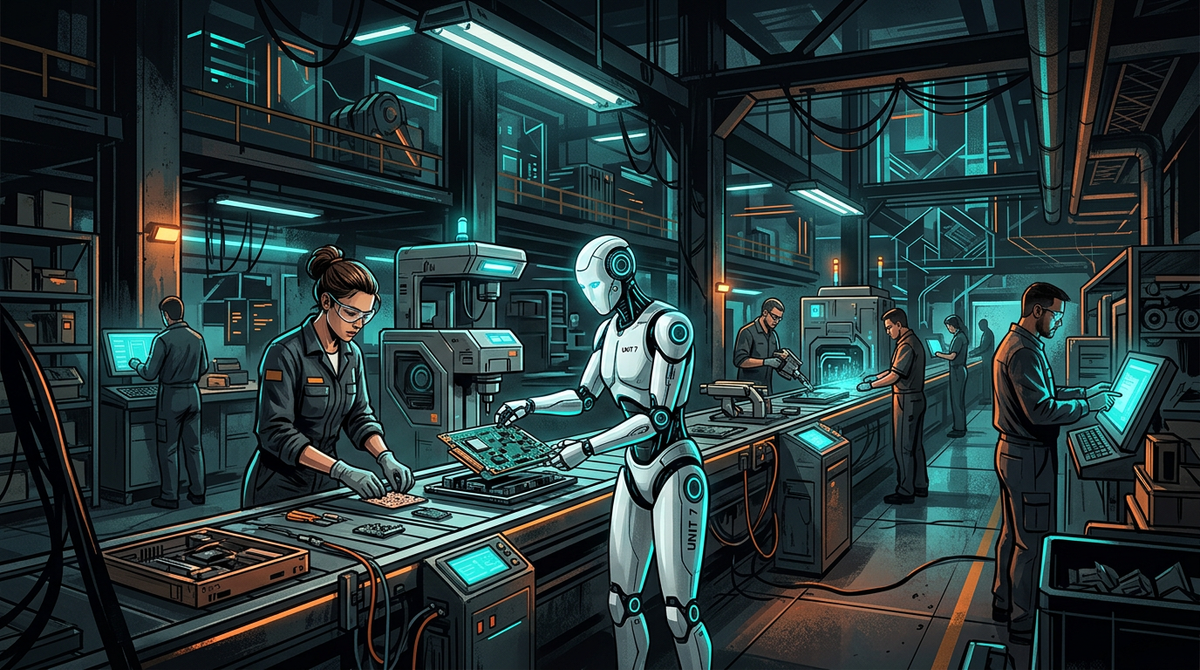
The robotics industry is currently witnessing a massive influx of capital, exemplified by Travis Kalanick’s Atoms raising $1.7 billion for industrial AI. However, the most significant shift isn't just in the funding, but in the application. A new partnership between Toyota and Walden Robotics signifies a move toward "practical humanoids"—machines designed not for viral videos, but for the grueling, repetitive tasks of the modern economy.
For years, the robotics world was split between specialized industrial arms and overly ambitious humanoid prototypes that lacked utility. The current trend, often referred to as 'Robotics 2.0,' leverages generative AI and advanced actuators to create general-purpose robots that can finally handle the unpredictability of human environments. Toyota’s involvement suggests a focus on the manufacturing and logistics sectors, where the humanoid form factor allows robots to operate within existing infrastructure designed for people.
This resurgence of interest is driven by the realization that hardware has finally caught up with software vision. With more efficient motors and better battery density, humanoid robots can now operate for shifts long enough to be economically viable. As companies like Walden and Atoms scale their production, the goal is to transition from 'proof of concept' to 'proof of profit,' solving labor shortages in sectors ranging from heavy manufacturing to specialized recycling. The robotics revolution is no longer just about movement; it’s about the intelligent application of force in a human-centric world.
Source: IEEE Spectrum