The Rise of Physical AI: NVIDIA’s Agent Skills Bridge the Sim-to-Real Gap
NVIDIA is accelerating the development of Physical AI by introducing 'Agent Skills' that allow AI agents to navigate, interact, and perform complex tasks in the physical world through advanced simulation and foundation models.
The boundary between digital intelligence and physical action is blurring as NVIDIA unveils its latest research into "Physical AI." At the heart of this evolution is the introduction of Agent Skills—a set of pre-trained capabilities that allow AI models to understand physics and interact with the real world. Unlike traditional AI that focuses on text or images, Physical AI requires a deep understanding of spatial relationships and material properties.
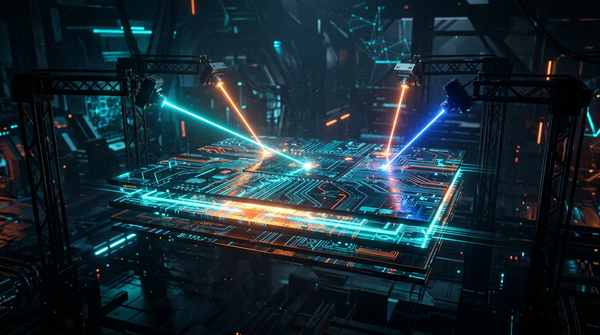
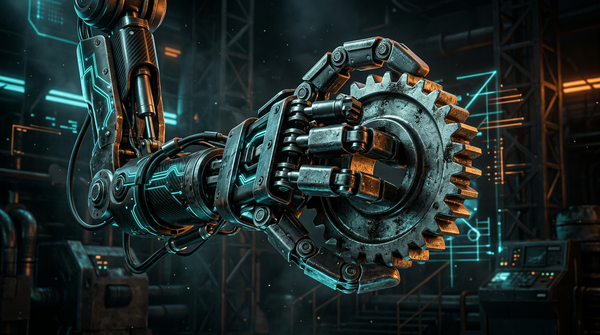
NVIDIA’s new framework leverages the Blackwell architecture and NVIDIA Isaac Lab to create a feedback loop where AI agents can practice tasks in a photorealistic, physically accurate simulation before being deployed to live hardware. This "sim-to-real" pipeline is essential for training agents to handle the unpredictability of human environments. Key advancements include the ability for agents to generalize grasping—enabling a robot to pick up a tool it has never seen before by understanding its geometry rather than relying on a fixed database of objects.
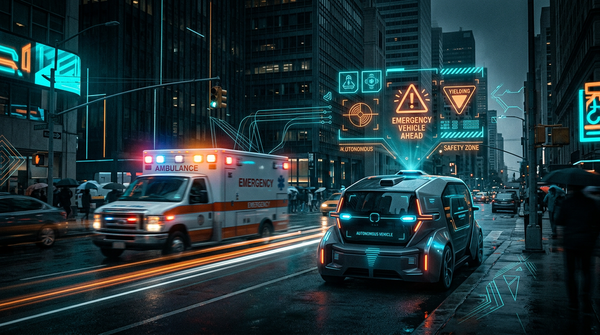
Furthermore, these agents are being integrated into autonomous driving stacks to provide "reasoning" capabilities. Instead of just following programmed rules, the Physical AI can analyze complex road scenarios and make decisions based on emergent behavior. This marks a shift from reactive systems to proactive, intelligent agents capable of navigating the chaos of the physical world with human-like intuition and digital precision.
Source: NVIDIA Blog