The New Fleet Watch: Gecko Robotics and the Rise of Maintenance Autonomy
Gecko Robotics has secured a major U.S. Navy contract to deploy maintenance-predicting robots across the fleet. This marks a significant milestone for the 'Dull, Dirty, and Dangerous' robotics sector.
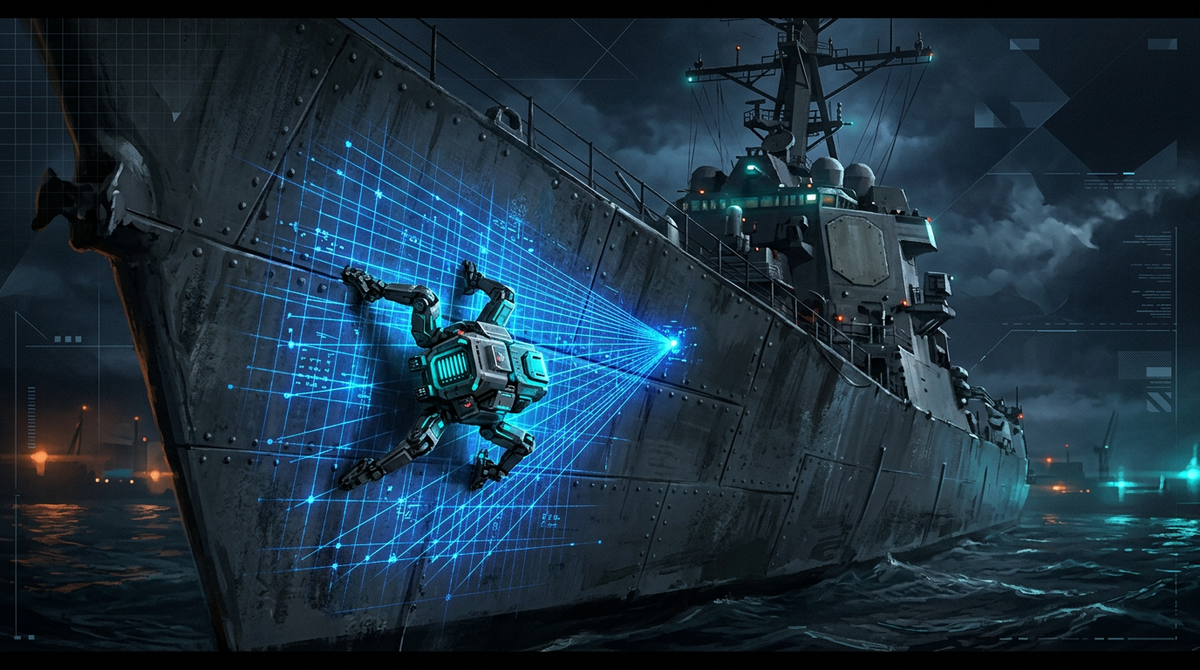
The U.S. Navy is turning to autonomous systems to solve one of its most persistent and "dirty" problems: hull and tank maintenance. Gecko Robotics has signed a five-year deal, its largest to date, to provide the Navy with wall-climbing robots equipped with advanced sensing suites. These robots are designed to identify corrosion and structural weaknesses that are often invisible to the human eye or too dangerous for human inspectors to reach.
This underscores the classic robotics mantra of the "Three Ds": Dull, Dirty, and Dangerous. Inspecting the interior of a fuel tank or the underside of a destroyer's hull in dry dock is all three. By using robots to crawl these surfaces, the Navy can collect millions of data points, creating a "digital twin" of each ship. This data is then fed into predictive models to determine exactly when and where maintenance is required, significantly reducing downtime for the fleet.
The move represents a broader trend in industrial robotics toward "mobile sensing." Rather than static arms on a factory floor, these robots are agile platforms that move through complex, unmapped environments to provide actionable intelligence. For the Navy, this isn't just about efficiency—it's about readiness in an increasingly contested maritime landscape.
Source: TechCrunch