The Edge Case Myth: Why AVs Must Master Emergency Scene Navigation
Federal regulators are reminding AV developers that emergency scenes are not 'edge cases' but expected realities. A recent Zoox recall following smoke-related confusion highlights the urgent need for more robust ADAS and sensor fusion in complex environments.
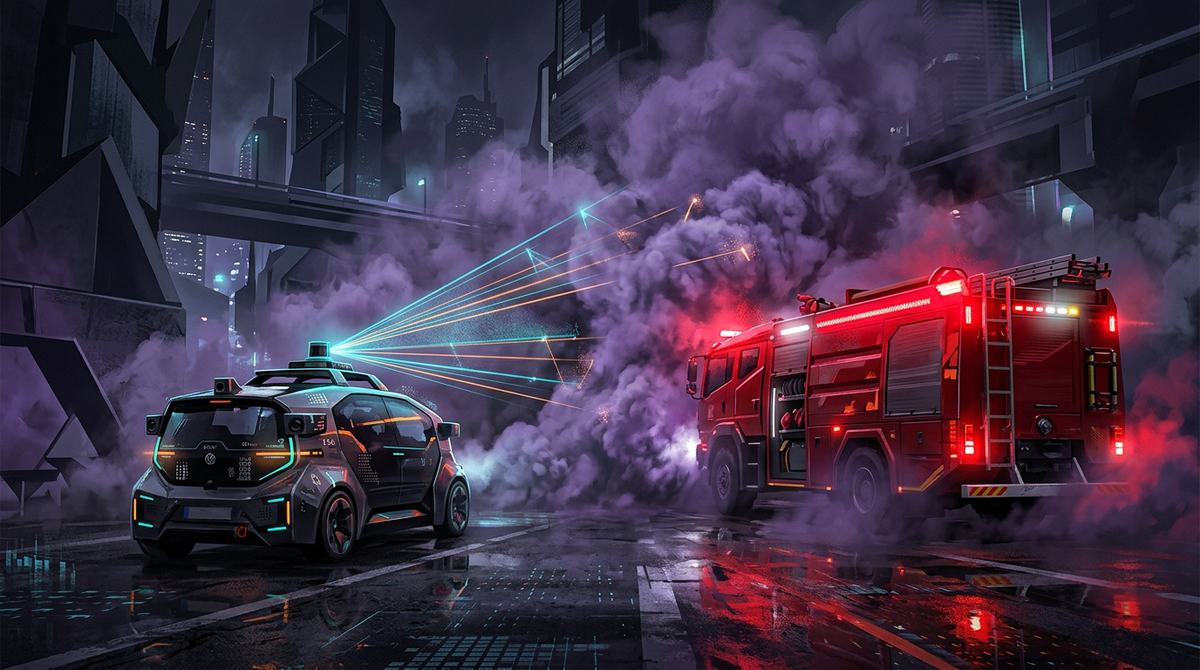
The National Highway Traffic Safety Administration (NHTSA) has issued a stern directive to the autonomous vehicle industry: emergency scenes are not "edge cases." This warning comes alongside a recent software recall by Zoox, after one of its robotaxis became confused by heavy smoke at an active fire scene, potentially interfering with first responders.
For Advanced Driver Assistance Systems (ADAS) and fully autonomous stacks, the ability to recognize and appropriately react to emergency vehicles and unconventional hazards—like thick smoke or flares—is a critical safety threshold. The Zoox incident highlights a vulnerability in current sensor fusion; while LiDAR and cameras are excellent at identifying solid objects, they can struggle with environmental occlusions that humans navigate by context.
The federal push for better integration with first responders signifies a shift in regulatory focus. It is no longer enough for an AV to simply avoid collisions; it must also demonstrate "social intelligence" on the road. This means recognizing the authority of a fire marshal’s hand signals or the priority of an ambulance, ensuring that the next generation of ADAS is as legally compliant as it is technically proficient.
Source: TechCrunch