The Dexterity Frontier: Proception Secures $11M to Solve Robotic Manipulation
Proception, a startup focused on the intricate mechanics of robotic hands, has settled a trade secret dispute with Tesla while securing $11 million in new funding. The company’s focus on high-fidelity dexterity highlights the growing importance of specialized hardware in the robotics ecosystem.
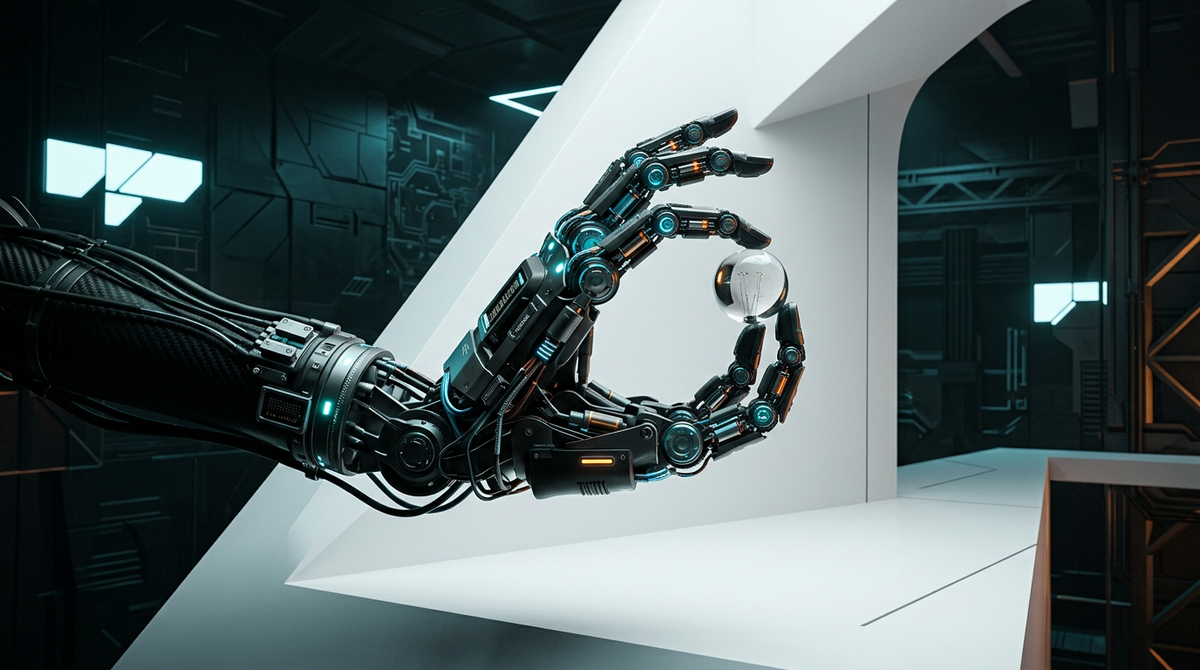
In the race to build general-purpose humanoids, the "hand" remains one of the most difficult engineering challenges. Proception, a robotics startup that recently emerged from a legal battle with Tesla, is doubling down on this specific problem. With a fresh $11 million in capital, the company is targeting the bottleneck of robotic manipulation: the ability to handle delicate, varied objects with the same nuance as a human.
Proception’s approach is unique because it integrates specialized tactile sensors with a proprietary data collection method. Most robotic training today relies on vision, but for true dexterity, a robot must "feel" the friction and weight of an object. Proception is building a dataset based on these haptic interactions, allowing its robotic hands to learn through physical trial and error in ways that vision-only models cannot replicate. This "touch-first" philosophy is essential for applications in electronic assembly and laboratory automation, where millimeters of error can lead to failure.
The settlement with Tesla also removes a significant cloud over the company, allowing it to move forward with commercial partnerships. As the robotics industry moves toward "Software-Defined" models, having a hardware interface as capable as Proception’s hand ensures that the AI’s intelligence isn't wasted on clumsy physical actuators. The future of robotics will likely see a decoupling of the central "brain" and the specialized "limbs," with Proception positioned as a leading provider of the latter.
Source: TechCrunch