Tesla’s Cybercab Strategy: Crowdsourcing the Autonomous Fleet
Tesla is exploring a new business model for its upcoming Cybercab, soliciting interest from individuals and companies to purchase and manage their own autonomous fleets. This shift moves Tesla closer to a franchise-style model for decentralized autonomous transport.
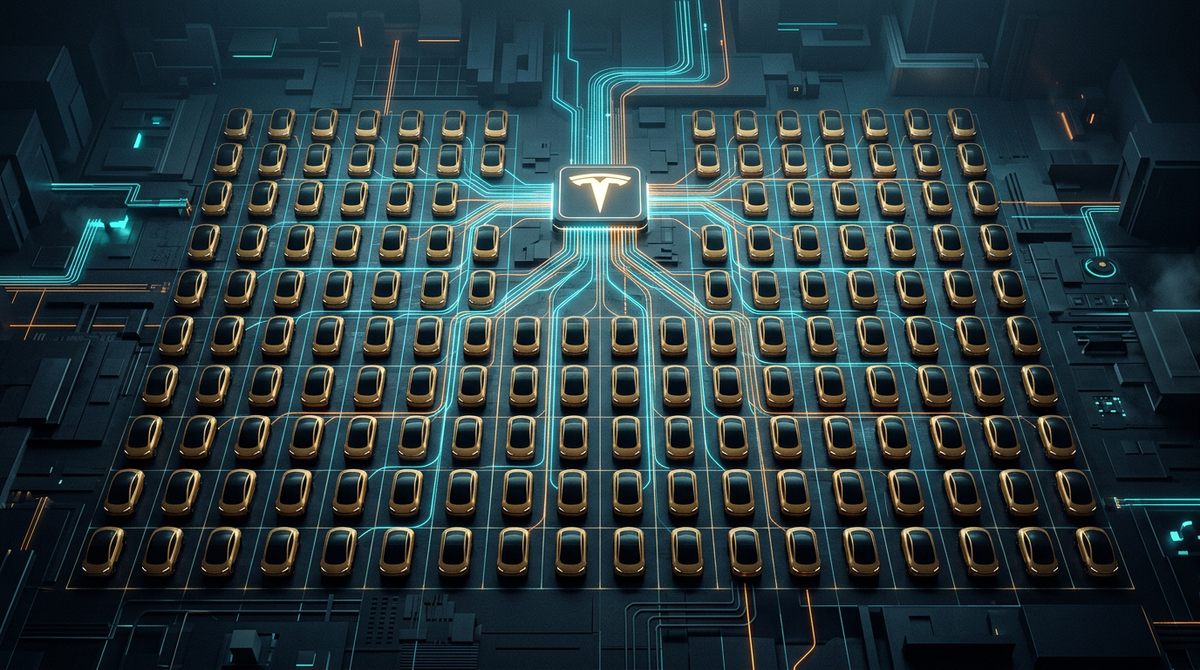
Tesla is laying the groundwork for a radical shift in how autonomous vehicles are owned and operated. Rather than maintaining a purely first-party fleet, the company has begun soliciting interest from potential "Cybercab fleet managers." A new form on Tesla’s website asks interested parties about their capacity to purchase and run fleets of the upcoming dedicated robotaxi.
The Cybercab, a vehicle designed without a steering wheel or pedals, represents the ultimate realization of the Software-Defined Vehicle (SDV). By decoupling the hardware from the driver, Tesla is transforming the car into a mobile node in a distributed computing network. Fleet managers would essentially be managing "hardware-as-a-service," relying on Tesla's central Full Self-Driving (FSD) software to generate revenue.
This move suggests that Tesla intends to leverage third-party capital to scale its network rapidly, mirroring the way cloud providers or logistics giants operate. It also highlights the importance of Tesla’s backend infrastructure. For a fleet manager, the vehicle’s value is entirely dependent on OTA (Over-the-Air) updates and the efficiency of Tesla’s centralized dispatch and routing AI. The Cybercab isn't just a car; it's a programmable asset in a new era of decentralized logistics.
Source: TechCrunch