Tesla’s Cybercab Hits the Streets as Regulators Define Safety Boundaries
Tesla has begun testing its steering-wheel-less Cybercab on Austin streets, signaling a pivot toward a dedicated robotaxi fleet. Meanwhile, federal regulators are intensifying scrutiny, demanding that autonomous systems prioritize first responder safety.

The autonomous vehicle (AV) landscape is witnessing a dramatic return to its "hype cycle" roots, but with a sharpened focus on commercial viability and regulatory compliance. Tesla has officially moved its Cybercab—a vehicle designed without pedals or a steering wheel—into the testing phase on public roads in Austin, Texas. This represents Elon Musk’s most aggressive move toward a pure-play robotaxi network, shifting away from driver-assist systems toward full Level 5 autonomy.
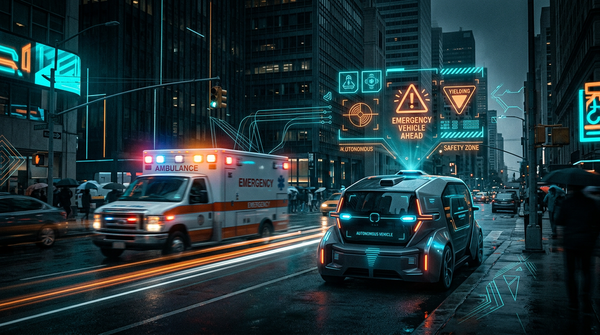
However, as the technology accelerates, so does the oversight. The National Highway Traffic Safety Administration (NHTSA) recently issued a stern warning to the AV industry, emphasizing that emergency scenes are not "edge cases" but expected environments. This follows several high-profile incidents where autonomous vehicles interfered with fire trucks and ambulances. The federal demand insists that companies prove their software can detect and appropriately yield to first responders in real-time.
The industry is now at a crossroads: while companies like Tesla push the boundaries of vehicle design by removing traditional controls, they must also satisfy rigorous new safety benchmarks that treat urban unpredictability as a core competency rather than a rare anomaly. The success of the Cybercab will depend as much on its ability to navigate a chaotic accident scene as its ability to drive from point A to point B without a human at the helm.
Source: TechCrunch