Solar-Powered Precision: How Upside Robotics is Decarbonizing the Corn Belt
Upside Robotics is deploying autonomous, solar-powered robots to revolutionize corn farming. By using precision application data to reduce fertilizer waste by 70%, the company is proving that small-scale, specialized robotics can solve large-scale environmental challenges.
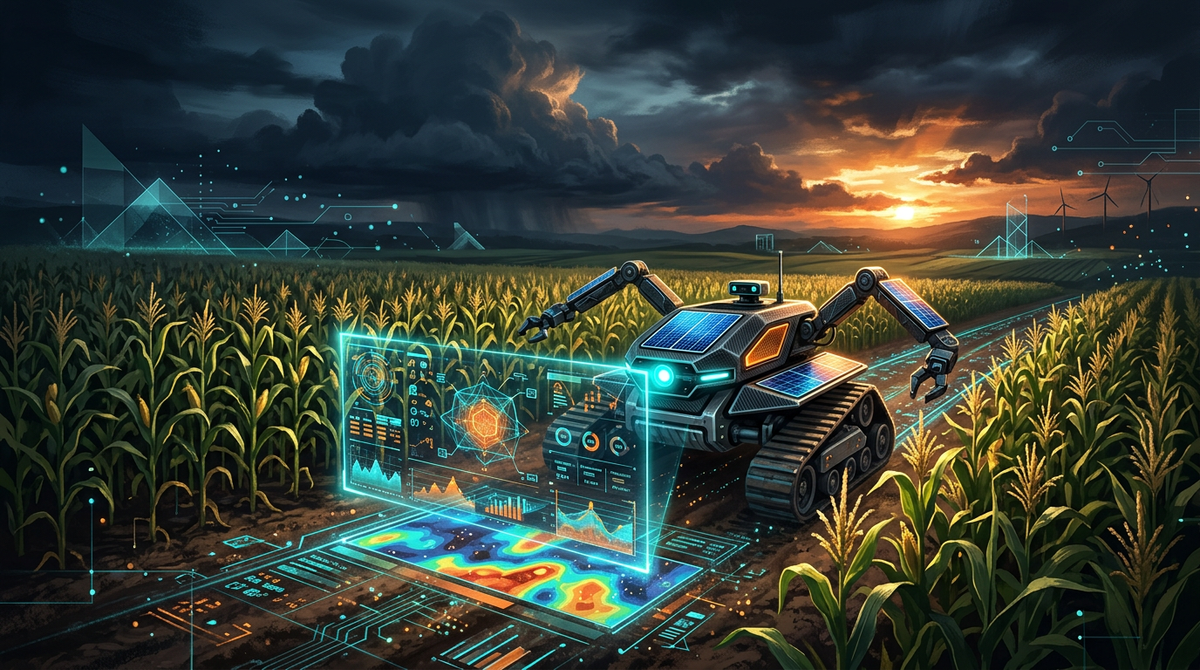
The future of agriculture isn't just about bigger tractors; it’s about smarter, smaller, and more autonomous machines. Upside Robotics, a startup focused on crop health, is debuting solar-powered robots designed to navigate cornfields with surgical precision. Their mission is to tackle one of the most expensive and environmentally damaging aspects of modern farming: fertilizer runoff. By deploying autonomous units that apply nutrients directly to the base of individual plants, the company claims it can reduce fertilizer use by up to 70%.
This specialized application of robotics represents a shift away from "carpet-bombing" fields with chemicals. The Upside robots use a combination of computer vision and GPS to thread their way through rows of corn, identifying the optimal moment and location for nutrient delivery. Because the units are solar-powered and autonomous, they can operate continuously without human intervention, identifying specific plants that are under-performing and providing a targeted boost.
The economic implications are as significant as the environmental ones. Fertilizer is a major commodity cost for farmers, and traditional application methods often result in significant waste through evaporation or groundwater leaching. By optimizing the delivery system through robotics, farmers can lower their overhead while improving crop yield. This "micro-farming" approach is the vanguard of a broader movement in robotics: moving away from general-purpose machines toward highly specialized agents that solve one critical problem with extreme efficiency.
Source: TechCrunch