Redefining Safety: ADAS and the First Responder Challenge
A recent software recall by Zoox highlights the critical need for ADAS systems to recognize first responders and 'non-standard' environments like heavy smoke. Regulators are now demanding that emergency scenes no longer be treated as edge cases.
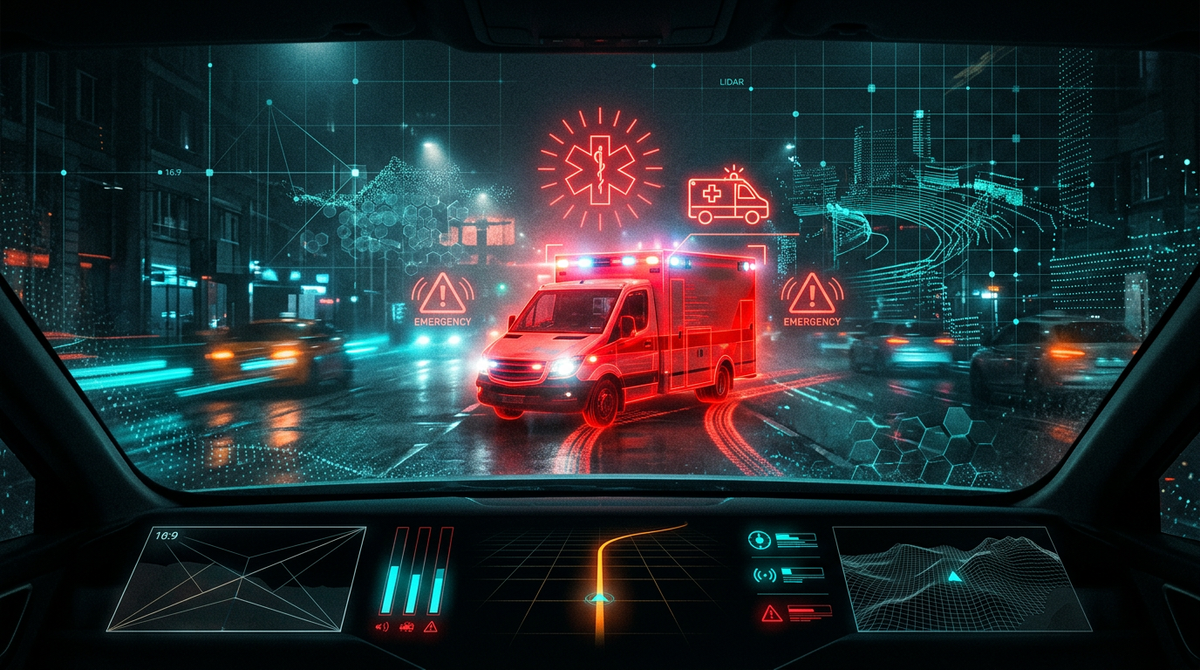
Beyond the Edge Case: The New Mandate for ADAS
The National Highway Traffic Safety Administration (NHTSA) has sent a clear message to the industry: emergency scenes are not "edge cases." This directive follows a software recall by Zoox, after one of its robotaxis became confused by heavy smoke at an emergency site. This incident underscores a fundamental flaw in current Advanced Driver Assistance Systems (ADAS) and autonomous stacks—the inability to reliably interpret high-stress, low-visibility environments involving first responders.
Improving ADAS reliability in these scenarios requires a multi-modal sensing approach. Traditional LiDAR and cameras can be blinded by thick smoke or intense flashing lights from emergency vehicles. The path forward involves integrating thermal imaging and advanced signal processing that can distinguish between a stationary obstacle and a dynamic emergency scene. Furthermore, V2X (Vehicle-to-Everything) communication could allow emergency vehicles to broadcast "digital flares," alerting nearby ADAS systems to yield or reroute before they even enter the visual range of the scene.
This regulatory shift will force developers to prioritize "socially aware" driving. ADAS must learn to recognize the nuance of a hand signal from a police officer or the significance of a temporary detour sign. By moving these scenarios from the periphery to the core of safety testing, the industry can build the public trust necessary for wide-scale adoption.
Source: TechCrunch