Practical Humanoids: Why Toyota is Betting on Utility Over Hype
Walden Robotics and Toyota are shifting the focus from 'cool' humanoid robots to practical, task-oriented machines that can actually work in human environments.
The robotics industry is experiencing a "realism check." After years of flashy demonstrations of humanoids performing backflips, companies like Walden Robotics and Toyota are refocusing on "practical humanoids"—robots designed specifically for the messy, unoptimized environments of factories and homes. This partnership signals a move away from general-purpose hype toward specific, value-driven utility.
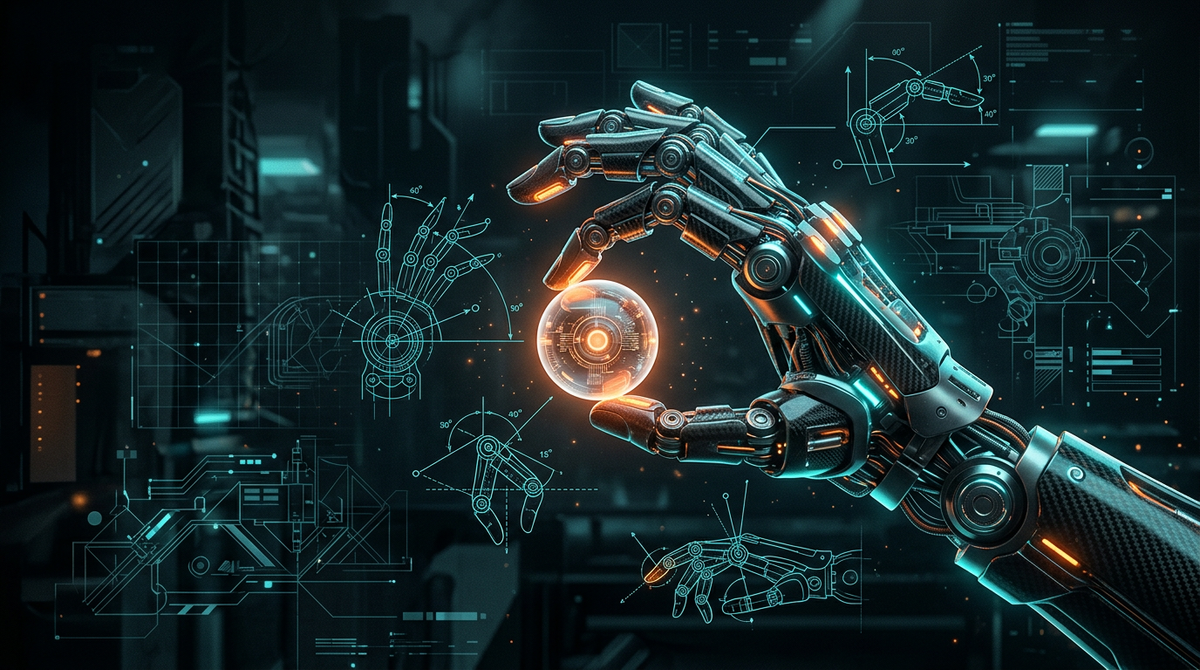
The core challenge in modern robotics isn't balance or movement; it's dexterity and haptic feedback. To be truly useful, a robot needs to "feel" the world. New research into robotic fingers that can "feel in color" (using optical sensors to detect microscopic skin deformations) is a prime example of the hardware evolution required. When a robot can sense the texture of a surface or the weight of a delicate object, it moves from being a programmed machine to a collaborative tool.
Furthermore, the integration of Large Behavior Models (LBMs) is allowing robots to learn tasks via observation rather than rigid coding. By training on diverse datasets—including, interestingly, video game data—robots are developing a more intuitive understanding of spatial physics. The Walden-Toyota collaboration is likely to prioritize these "soft skills" of robotics: the ability to navigate around humans safely, handle varying payloads, and operate for extended shifts without failure. The goal is no longer to build a robot that looks like a human, but one that can work alongside them effectively.
Source: IEEE Spectrum