NVIDIA XR AI: Bringing Multimodal Agents to the Physical World
NVIDIA has launched its XR AI framework in public beta, enabling developers to integrate multimodal AI agents into AR glasses. This move signifies a shift toward spatial computing where AI 'sees' and 'interacts' with the physical world in real-time.
The boundary between digital intelligence and physical reality is thinning as NVIDIA releases its XR AI framework into public beta. This new toolkit is designed specifically for the next generation of augmented reality (AR) and cross-reality (XR) devices, providing developers with the essential scaffolding to build multimodal AI agents that can operate hands-free. Unlike traditional AI that lives behind a flat screen, Physical AI in the context of XR interprets the user’s environment through sensors and cameras to provide contextually aware assistance.
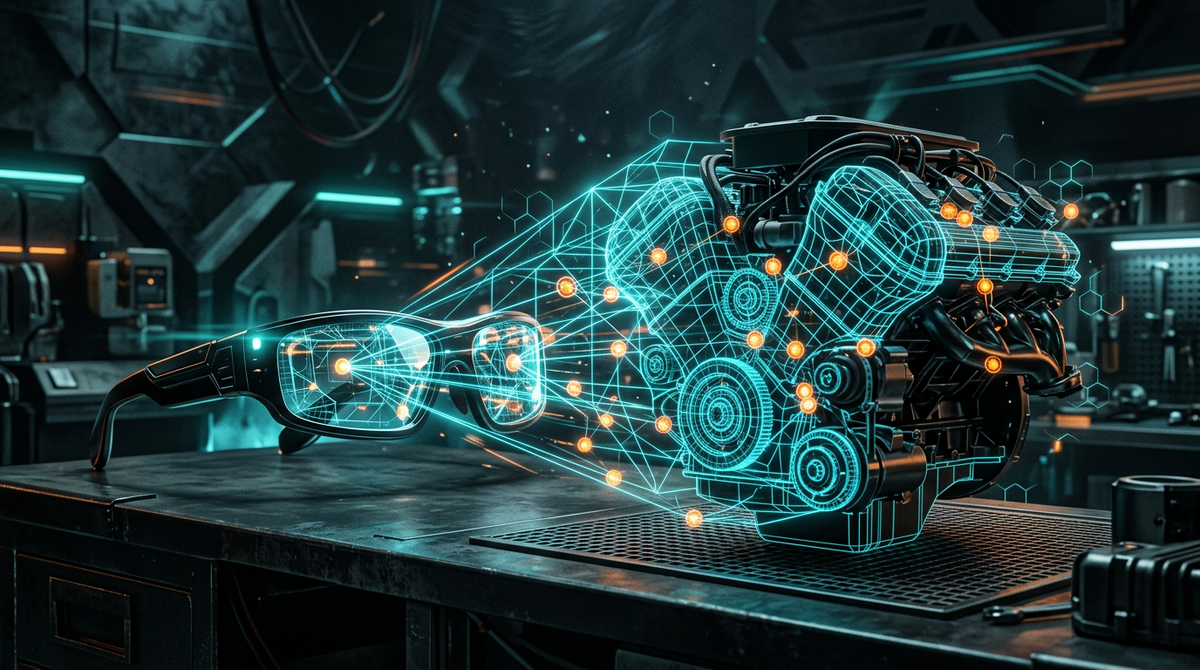
The framework leverages NVIDIA’s expertise in computer vision and large language models (LLMs) to create 'agents' that don't just respond to voice commands but understand physical spatial cues. For example, a technician wearing AR glasses could receive real-time, overlayed instructions for repairing a complex engine, with the AI identifying specific components and suggesting the next physical move. This capability is powered by low-latency processing, ensuring that the AI’s digital augmentations remain perfectly synced with the wearer’s head movements and the physics of the environment.
As we move toward an era of 'agentic' technology, the NVIDIA XR AI framework represents a pivotal step in moving AI from a passive tool to an active participant in human physical tasks. By bridging the gap between high-level reasoning and real-world perception, NVIDIA is setting the stage for AR devices to become the primary interface for Physical AI, fundamentally changing how we interact with the world around us.
Source: NVIDIA Blog