NVIDIA Bridges the Reality Gap with Medical Physics Simulation
NVIDIA's new open-source framework, Holoscan for Medical Physics, allows healthcare robots to simulate complex physical interactions with human anatomy. By accounting for tissue deformation and instrument slippage, the system prepares AI for the unpredictable nature of surgery.
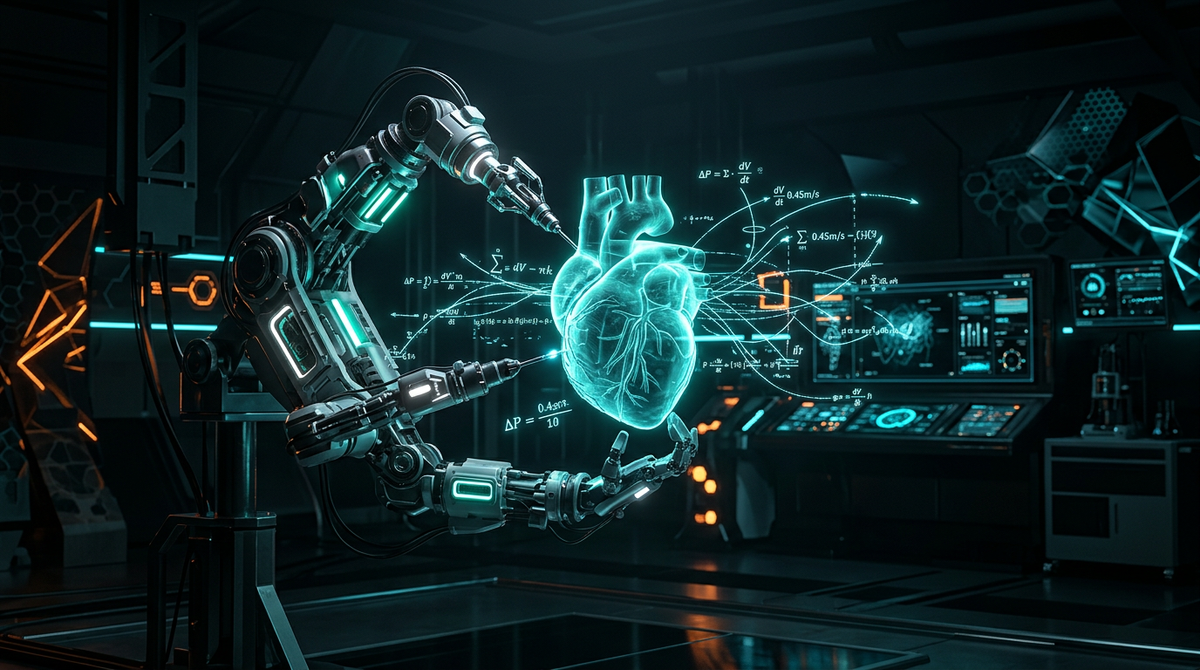
The transition of AI from digital assistants to physical actors requires a profound understanding of the messy, unpredictable nature of the material world. In surgical settings, this challenge is magnified: instruments bend, tissues compress, and fluids obscure visibility. NVIDIA has addressed this by open-sourcing its first GPU-accelerated medical physics simulation framework, designed to bridge the gap between virtual training and real-world clinical application.
Built on the NVIDIA Holoscan platform, the framework enables developers to create "high-fidelity" simulations where robots can practice interacting with varied human anatomy. Unlike traditional models that treat objects as rigid bodies, this physics-based approach accounts for soft-tissue deformation and the specific friction coefficients of medical-grade materials. This allows AI-driven robotic arms to learn how much pressure to apply before a slip occurs, or how to compensate when an organ shifts during a procedure.
By open-sourcing these tools, NVIDIA is accelerating the development of Physical AI in healthcare. Researchers can now iterate on autonomous suturing, palpation, and imaging-guided navigation without the logistical hurdles of physical cadaver labs. The goal is to create a seamless feedback loop where the AI’s digital twin and its physical counterpart operate under the same laws of physics, ensuring safety and precision when the robot eventually reaches the operating theater.
Source: NVIDIA Blog