NHTSA to AV Makers: Emergency Scenes are Not Edge Cases
Federal regulators are demanding that autonomous vehicle companies stop interfering with emergency responders at accident scenes. The NHTSA emphasized that fire trucks and police cordons are predictable infrastructure, not 'edge cases.'

The National Highway Traffic Safety Administration (NHTSA) has issued a stern directive to the autonomous vehicle (AV) industry: emergency scenes are a fundamental part of the driving environment, not rare "edge cases" that excuse erratic behavior. This move follows a series of incidents where self-driving taxis obstructed fire engines, entered active fire scenes, or failed to recognize hand signals from police officers.
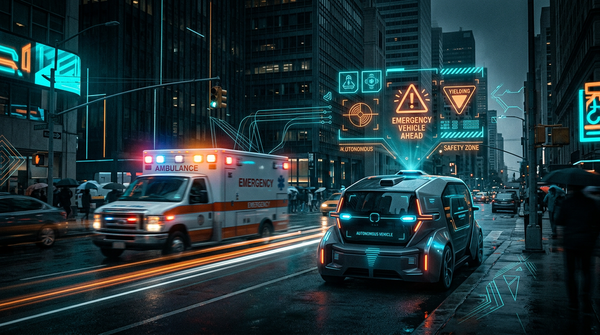
For years, AV developers have categorized complex human-led scenarios—like a chaotic multi-car accident with flashing lights and flares—as difficult-to-solve edge cases. However, federal regulators are losing patience. The demand for better integration with first responders highlights a critical friction point in the rollout of driverless fleets. If a vehicle cannot safely navigate around a ladder truck or yield to an ambulance, it poses a systemic risk to public safety.
The mandate suggests that future software updates must prioritize the recognition of emergency vehicle acoustics and visual patterns far more aggressively. As AV companies like Waymo and Zoox expand their operational design domains, the ability to "play nice" with the humans who save lives will be as important as the ability to stay in a lane. This regulatory pressure is expected to accelerate the development of V2X (Vehicle-to-Everything) communication standards that allow emergency vehicles to digitally "command" nearby robots to clear a path.
Source: TechCrunch