NHTSA to AV Industry: Emergency Scenes are Not 'Edge Cases'
The National Highway Traffic Safety Administration has issued a stern warning to autonomous vehicle manufacturers, making it clear that emergency scenes are not edge cases. The demand comes as AVs increasingly interfere with first responders at critical sites.

For years, autonomous vehicle (AV) developers have classified rare or difficult scenarios—such as navigating around an active fire scene or obeying hand signals from a police officer—as "edge cases." This classification allowed companies to prioritize common driving tasks while treating emergency interactions as secondary goals. However, the U.S. federal government is officially ending that grace period.
The National Highway Traffic Safety Administration (NHTSA) has issued a directive demanding that AV companies stop interfering with first responders. Regulators are concerned that robotaxis are blocking fire hydrants, driving over active fire hoses, or becoming immobilized in the middle of emergency scenes, forcing responders to manually move the multi-ton vehicles. "Emergency scenes are a predictable part of the road," the regulator noted, effectively reclassifying them as a core requirement for Advanced Driver Assistance Systems (ADAS) and full autonomy.
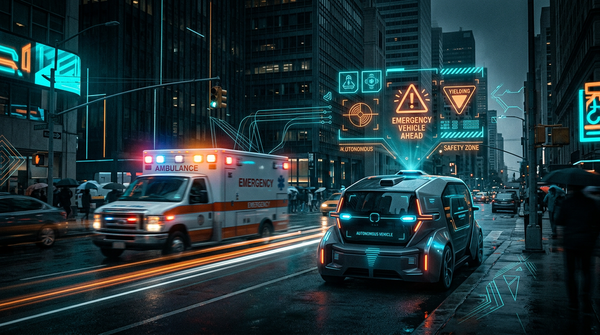
This shift requires a fundamental redesign of how ADAS and AV systems perceive the world. It is no longer enough for a vehicle to recognize a "red light" or a "stop sign." Now, systems must be trained to recognize the specific visual and auditory signatures of emergency vehicles from blocks away and proactively yield the right of way. For consumers, this likely means more robust ADAS features that can anticipate sirens and pull over safely before a human even realizes help is on the way. The era of the "confused" robotaxi at an accident scene is nearing its regulatory end.
Source: TechCrunch