NHTSA to AV Developers: Emergency Scenes are Not Edge Cases
Federal regulators are demanding that autonomous vehicle companies improve their interaction with emergency responders, declaring that sirens and flashing lights are not 'edge cases.' This push is set to drive significant advancements in ADAS perception for recognizing emergency scenarios.
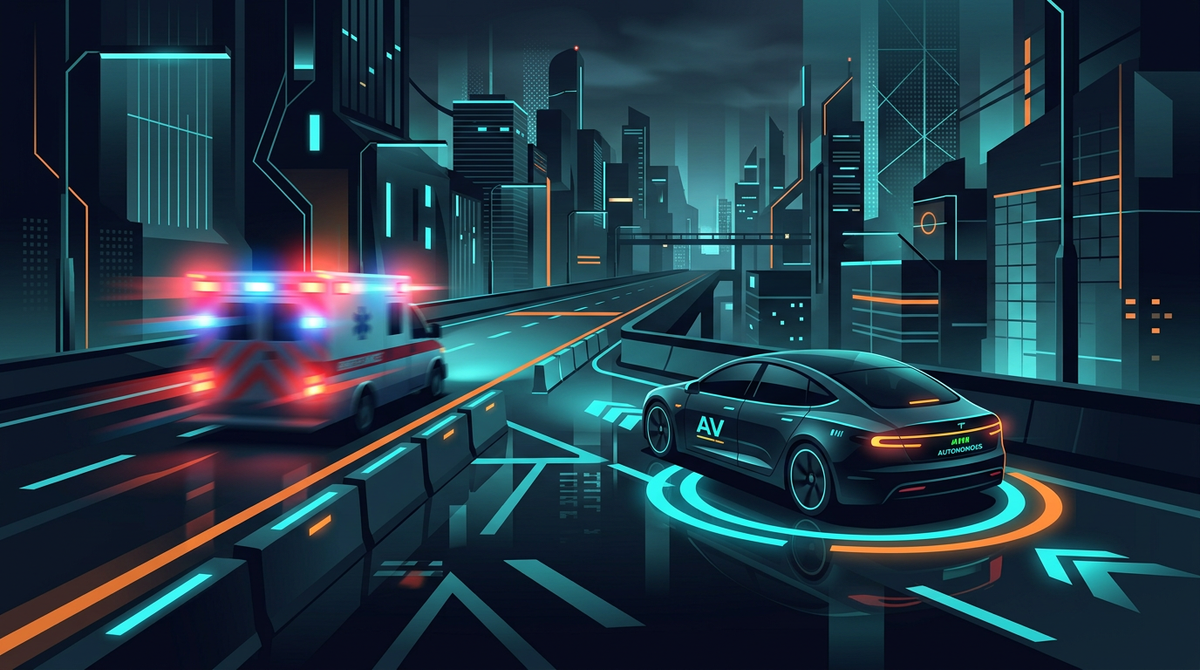
The National Highway Traffic Safety Administration (NHTSA) has issued a stern directive to the autonomous vehicle industry: stop interfering with first responders. Following several high-profile incidents where self-driving cars blocked fire trucks or entered active crime scenes, the agency clarified that interacting with emergency vehicles is a core competency, not a rare "edge case" that can be ignored during development.
This regulatory pressure is expected to catalyze a new wave of innovation in Advanced Driver Assistance Systems (ADAS). Developers must now fine-tune their sensor fusion and acoustic recognition algorithms to identify sirens and strobe lights from greater distances and with higher reliability. Current ADAS systems often struggle with the unpredictable nature of emergency scenes, where human officers may use hand signals or redirect traffic in ways that contradict standard road markings.
To comply, companies are likely to integrate more sophisticated audio-processing AI to "hear" sirens and relate their directionality to the vehicle's path. Furthermore, the industry is exploring V2X (Vehicle-to-Everything) communication protocols that would allow emergency vehicles to broadcast their presence and intentions directly to the ADAS controllers of surrounding cars. This shift ensures that the next generation of driver assistance will be more socially aware and responsive to the needs of public safety.
Source: TechCrunch