NASA’s New Robotics Stack: Automating Off-World Assembly
NASA is leveraging advanced robotics to automate the assembly of space structures, using new foundation stacks to give robots general-purpose assembly skills. This research is paving the way for autonomous construction on the Moon and Mars.
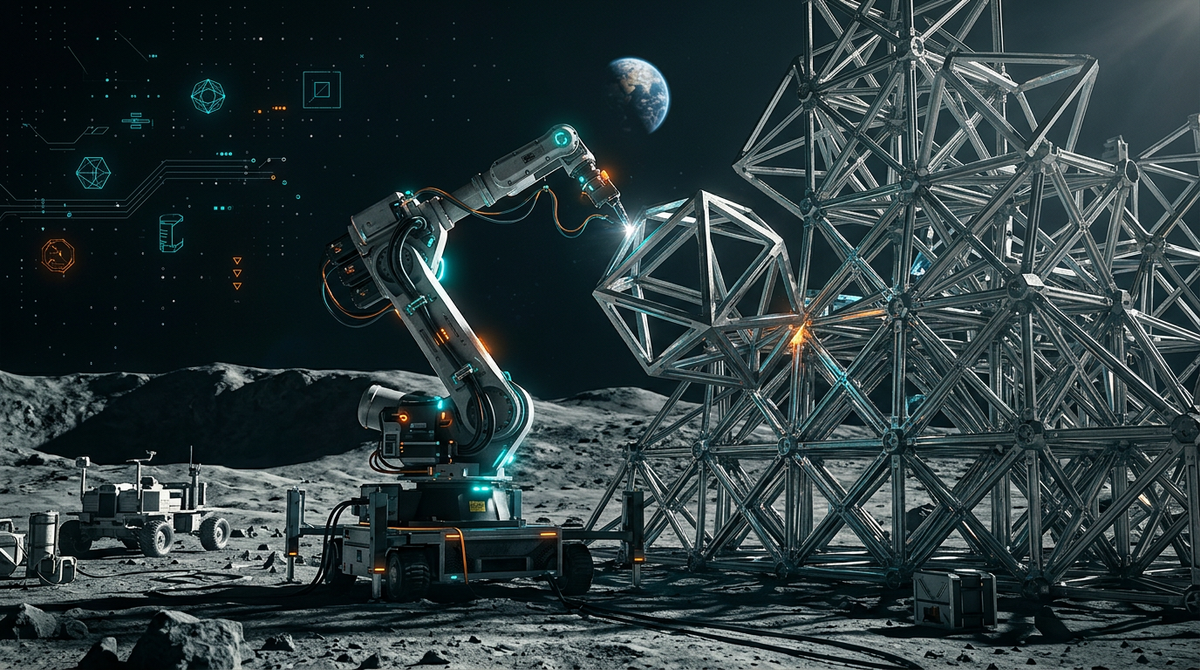
Robotics is moving beyond the "one robot, one task" paradigm. At NASA, researchers are equipping a new generation of robots with generalized assembly skills, focusing on the ability of machines to build complex structures without constant human oversight. Sarah Downs, a graduate student working with NASA, is at the forefront of this effort, developing systems that allow robots to understand the logic of construction.
The challenge is significant: in space, communication latency means robots cannot be remote-controlled in real-time. They must possess "embodied AI" that understands how to manipulate components, fasten connectors, and troubleshoot misalignments autonomously. This is being achieved through the development of "foundation stacks" for robotics—large-scale models trained on physical manipulation data that provide a "common sense" for mechanical labor.
These advancements are critical for the Artemis missions and the eventual colonization of Mars. By automating the assembly of habitats and solar arrays, NASA can reduce the workload for astronauts and ensure that infrastructure is ready before humans even arrive. This isn't just about moving arms; it's about giving robots the cognitive framework to be autonomous construction workers in the harshest environments imaginable.
Source: IEEE Spectrum