Mastering the Grip: Why the 'Hand Problem' is the New Robotics Holy Grail
Proception, a robotics startup focusing on human-like hand dexterity, has raised $11M after settling a trade secret dispute with Tesla. The company is using a unique data collection method to solve the 'hand problem,' arguably the most difficult hurdle in humanoid robotics.
The Dexterity Frontier: Solving Robotics' Hardest Problem
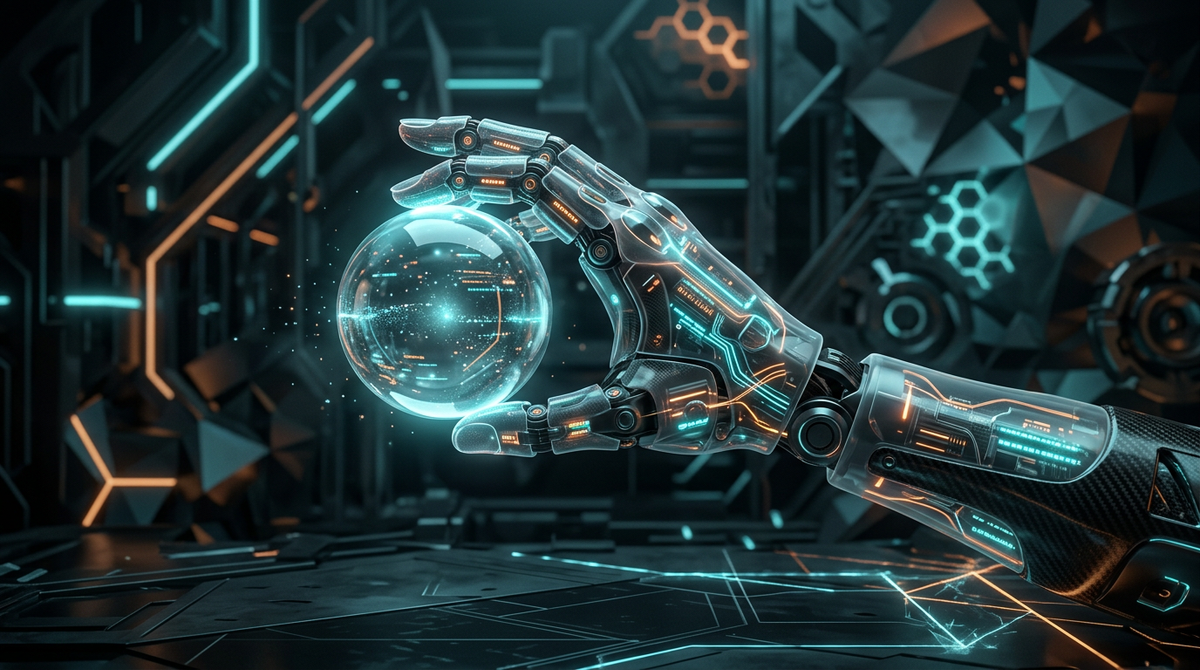
While humanoid robots have made massive strides in locomotion—exemplified by recent world-record-breaking runs in China—true utility remains limited by their hands. Manipulating varied objects with the same grace and adaptability as a human is a challenge that has remained largely unsolved. Proception, a Silicon Valley startup, is betting that their data-driven approach to robotic hands will be the key to unlocking industrial and domestic humanoid use.
The company recently made headlines not just for its $11 million funding round, but for settling a legal battle with Tesla over trade secrets. This legal interest from the world's most valuable carmaker underscores how valuable dexterity IP has become. Proception’s approach involves a proprietary method for collecting high-fidelity training data, which allows neural networks to learn the subtle pressures and micro-movements required for fine motor tasks.
In the broader robotics landscape, the debate is shifting from "how do we make them walk?" to "how do we make them work?" Solving the hand problem is essential for robots to move beyond simple "pick and place" tasks in controlled warehouses and into "unstructured" environments like kitchens or maintenance bays. The complexity of a human hand, with its dozens of degrees of freedom and thousands of tactile sensors, has been difficult to replicate with traditional actuators.
Proception’s focus on software-led dexterity suggests a future where robot hands are not just mechanical grippers, but adaptive tools that use visual and haptic feedback to "feel" their way through a task. As humanoid hardware becomes commoditized, the "soul" of the machine—and its ultimate value—will reside in the software models that determine how it interacts with the physical world through its hands.
Source: TechCrunch / IEEE Spectrum