Generative World Models: The New Frontier for SDV Simulation
Decart has unveiled Oasis 3, a world model capable of simulating hours of photorealistic driving environments. This breakthrough allows developers to test autonomous vehicle software in hyper-realistic virtual worlds, reducing the reliance on costly and dangerous real-world miles.
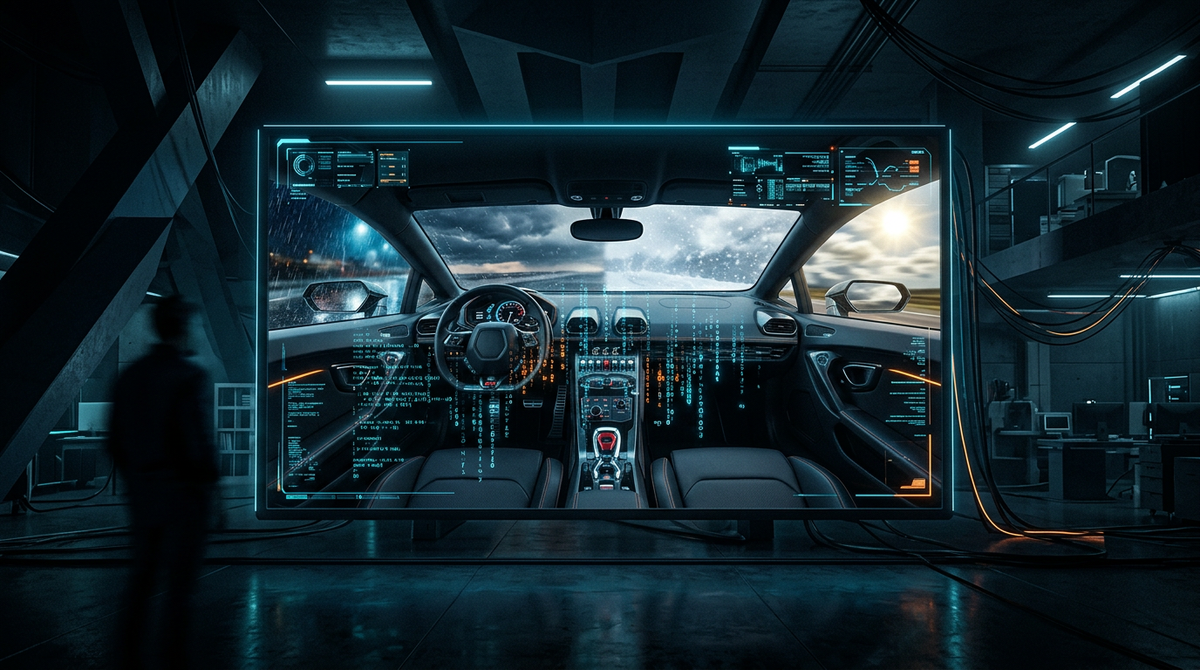
The development of Software-Defined Vehicles (SDVs) relies heavily on the quality of simulation. Decart’s latest release, Oasis 3, represents a quantum leap in generative "world models," capable of rendering photorealistic driving scenarios in real-time. Unlike traditional simulators that use manual assets and physics engines, Oasis 3 is a neural world model that has "learned" how the world looks and moves by ingesting millions of hours of driving footage.
This allows for the generation of infinite "what-if" scenarios. An SDV developer can prompt the API to generate a specific, rare edge case—such as a cyclist crossing a flooded intersection during a sunset—and the model will produce a continuous, photorealistic video stream that the vehicle's AI perceives as reality. This capability is critical for the iterative software cycles inherent to SDVs, where updates to the driving logic must be validated against thousands of diverse conditions before being pushed over-the-air (OTA) to the fleet.
While there are caveats regarding the model's current computational requirements and occasional temporal inconsistencies, the implications for the industry are profound. Decart is effectively providing a "digital twin" of the world that is interactive and generative, allowing the software stack of a modern vehicle to undergo "synthetic training" that was previously impossible. This marks a shift from hard-coded simulation to a more fluid, AI-driven approach to vehicle validation.
Source: TechCrunch