Federal Shift: The End of the Brake Pedal for Autonomous Fleets
The U.S. Department of Transportation has proposed removing the requirement for physical brake pedals in vehicles designed exclusively for autonomous driving, a massive win for Tesla’s Cybercab.
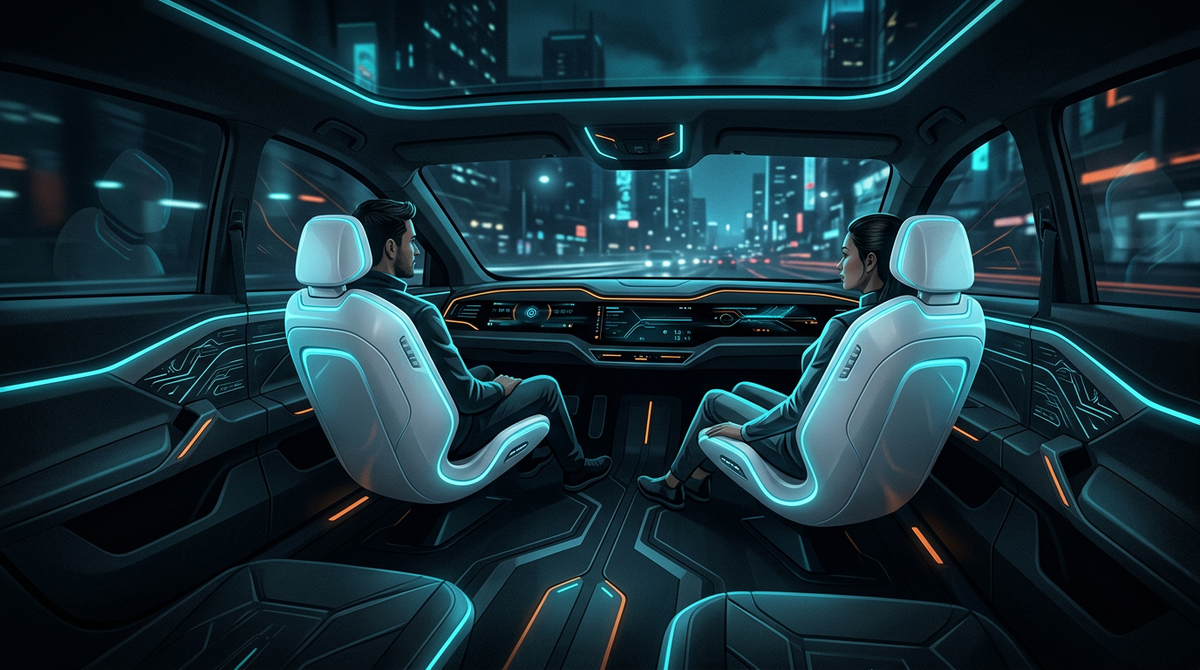
The regulatory landscape for autonomous mobility is shifting gears. The U.S. Department of Transportation (DOT) has officially proposed a rule that would axe the long-standing requirement for physical brake pedals in vehicles "designed to be driven exclusively by automated driving systems." This move is seen as a direct boost to companies like Tesla and Waymo, whose next-generation vehicle designs often omit traditional manual controls to maximize interior space and efficiency.
For years, Federal Motor Vehicle Safety Standards (FMVSS) assumed a human driver was always present, necessitating steering wheels and pedals even in self-driving prototypes. By removing these legacy requirements, the Trump administration is signaling a "light-touch" regulatory approach intended to accelerate the deployment of Level 4 and Level 5 autonomous vehicles. Tesla’s recently unveiled 'Cybercab' stands to benefit the most, as its design is predicated on a minimalist cabin free of mechanical interfaces.
Critics, however, raise concerns about emergency overrides. While software-defined braking is robust, the total removal of a mechanical fail-safe remains a point of contention among safety advocates. Nevertheless, for the AV industry, this represents the removal of one of the most significant design hurdles in the path toward fully autonomous commercial fleets.
Source: TechCrunch