Chasing the Sub-Two Hour Marathon: The Rise of High-Speed Humanoids
The Honor Lightning humanoid robot has shattered speed records, completing a half-marathon in just over 50 minutes. This milestone demonstrates significant advancements in bipedal locomotion, battery efficiency, and dynamic balance for humanoid systems.
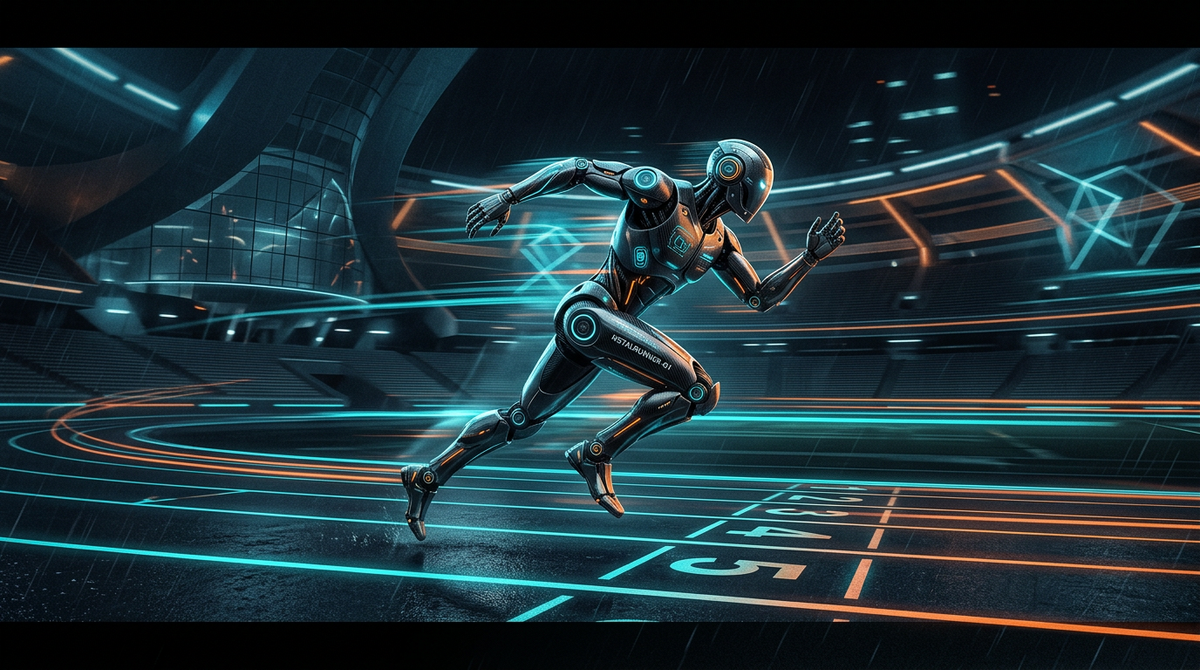
In a stunning display of robotic endurance and speed, the Honor Lightning humanoid robot completed a 21-kilometer run in approximately 50 minutes and 26 seconds. This achievement is not merely a novelty; it represents a significant technological breakthrough in leg design, actuator response time, and the integration of AI-driven balance algorithms. To maintain such a pace, the robot must constantly adjust its center of gravity and gait in response to uneven terrain, a feat that requires immense computational overhead.
The secret to this "marathon-winning" performance lies in the robot’s power-to-weight ratio and its uniquely engineered joints. Traditional humanoid robots have struggled with the "impact problem," where the force of each stride damages internal components over time. The Honor Lightning utilizes advanced carbon-fiber materials and regenerative braking in its actuators to absorb shock while simultaneously recovering energy. This allows the robot to sustain high-speed locomotion for extended periods without overheating or depleting its battery.
Moreover, the software controlling the Lightning’s movement utilizes deep reinforcement learning to optimize every footfall for efficiency. By simulating millions of gait variations in a virtual environment, the developers were able to refine a running style that mimics the efficiency of elite human athletes while leveraging the tireless precision of a machine. As humanoid robots move from the lab into the workforce, the ability to move quickly and reliably across varied environments will be the key differentiator between a prototype and a practical tool.
Source: IEEE Spectrum