Bridging the Sim-to-Real Gap: The Rise of Open World Models
NVIDIA is championing 'Open World Models' to bridge the gap between digital intelligence and physical reality. By leveraging the Omniverse, researchers are developing AI that understands Newtonian physics, enabling more predictable and capable robotic systems.
The Convergence of Simulation and Reality
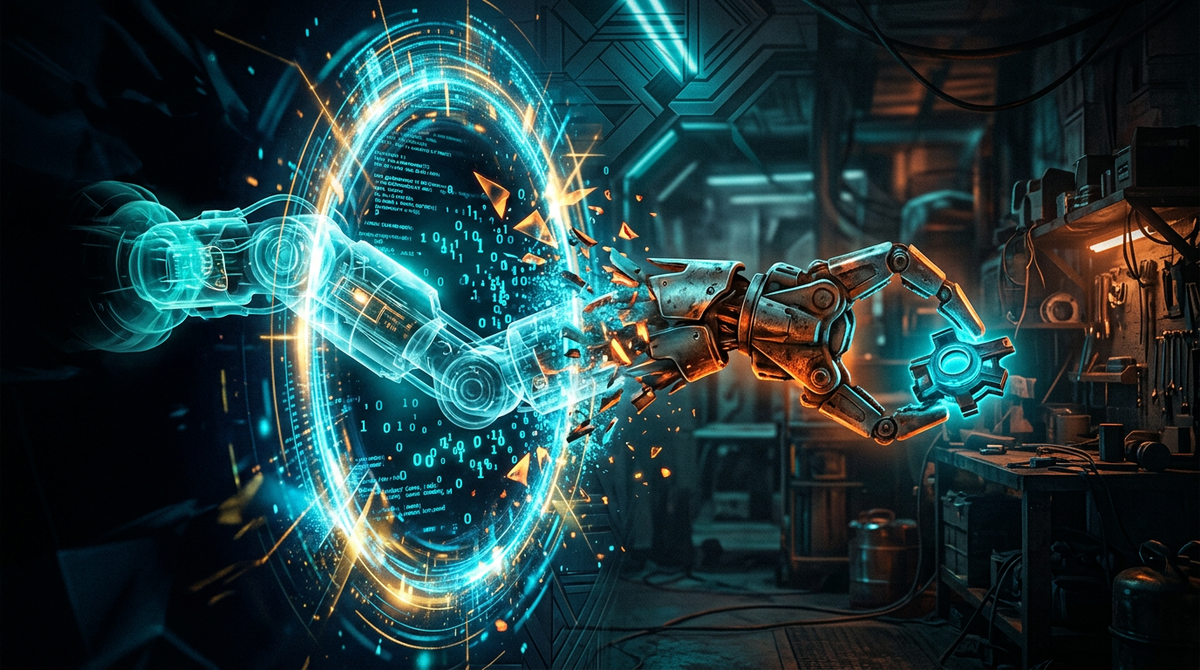
The frontier of Physical AI is no longer just about smarter algorithms; it is about grounding those algorithms in the laws of physics. NVIDIA’s recent push for "Open World Models" represents a strategic pivot toward creating AI systems that don't just process data, but understand the physical constraints of the world they inhabit. By utilizing the NVIDIA Omniverse, developers are building a foundation where AI agents can simulate complex interactions—such as gravity, friction, and fluid dynamics—before ever touching a physical motor.
This approach addresses the "sim-to-real" gap, one of the primary hurdles in robotics. When an AI learns in a purely digital environment that lacks physical fidelity, its performance degrades in the messy, unpredictable real world. Open World Models act as a shared cognitive framework, allowing for the rapid scaling of physical intelligence across diverse hardware platforms. NVIDIA’s commitment to open weights and collaborative development suggests a future where the building blocks of physical autonomy are accessible, accelerating the deployment of everything from industrial manipulators to household assistants.
Furthermore, these models are essential for safety-critical applications. A Physical AI that understands the structural integrity of an object or the momentum of its own limbs is inherently safer than one operating on pure pattern recognition. As these world models mature, we can expect a transition from robots that follow rigid scripts to autonomous agents that can reason about their physical environment in real-time.
Source: NVIDIA Blog