Bridging the Reality Gap: The Rise of Continuous Physics Reasoning
A new paradigm in 'Continuous Physics Reasoning' aims to provide AI systems with a deterministic understanding of physical structures, moving beyond simple pattern matching to solver-grade precision.
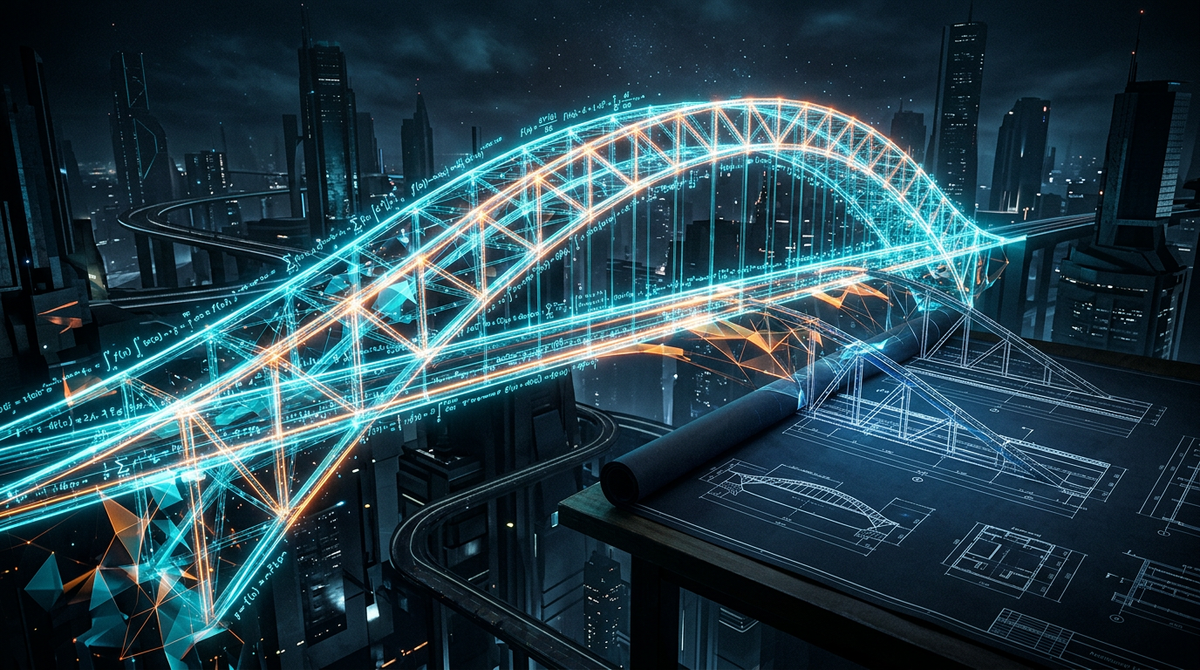
The boundary between digital intelligence and physical reality is blurring as researchers move toward "Continuous Physics Reasoning." Unlike traditional large language models that often struggle with the rigid laws of thermodynamics or structural integrity, these emerging foundation models are designed to reason natively over physical structures. The goal is to achieve deterministic, solver-grade accuracy that can be applied at manufacturing resolutions.
By integrating physics-based solvers directly into the AI’s reasoning loop, engineers can create systems that don't just "guess" what a physical outcome might be based on training data, but actually calculate it within the model's architecture. This is critical for high-stakes applications in aerospace, civil engineering, and materials science, where a general-purpose system must understand the implications of structural changes in real-time.
This shift represents a maturation of Physical AI, moving from generative art and text to generative engineering. These models act as bridge-builders between the digital twin and the physical asset, ensuring that the AI’s outputs are physically realizable and optimized for the real world.
Source: Semiconductor Engineering