Beyond the Wheel: Tesla Begins Austin Testing for Pedal-Less Cybercab
As Tesla begins road testing its 'Cybercab' in Austin, the era of purpose-built robotaxis without steering wheels or pedals has arrived. The deployment signals a shift toward total autonomy, moving away from driver-assist systems into fully managed, software-driven transportation networks.

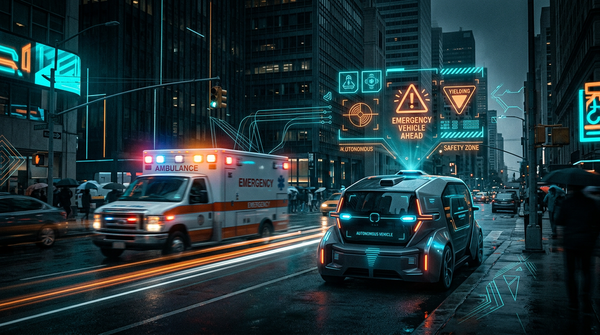
Tesla has long promised a future of autonomous mobility, but the recent sightings of the "Cybercab" in Austin, Texas, represent the most tangible evidence yet of this transition. For the first time, Tesla is testing vehicles that are fundamentally different from its consumer fleet; these prototypes lack the traditional mechanical interfaces of steering wheels and pedals, signaling a commitment to Level 5 autonomy that bypasses the "driver-in-the-loop" philosophy.
The testing in Austin serves as a critical validation phase for Tesla's vision-only approach. Unlike many competitors who rely heavily on high-definition maps and expensive LiDAR arrays, Tesla’s robotaxi strategy depends on its End-to-End Neural Network. This system processes raw video data to make driving decisions, theoretically allowing the Cybercab to operate in any environment without regional geofencing. However, the absence of manual controls brings significant regulatory scrutiny, as the vehicle must demonstrate it can handle "edge cases" with higher reliability than a human driver.
The Cybercab is not just a vehicle; it is the cornerstone of a planned autonomous ride-hailing network. By stripping away the hardware necessary for human driving, Tesla aims to reduce the bill of materials and maintenance costs, targeting a price point and efficiency level that could undercut traditional car ownership. As testing intensifies, the industry is watching to see if Tesla’s "FSD" (Full Self-Driving) software can bridge the gap from a supervised assistant to a fully autonomous operator in complex urban environments.
Source: TechCrunch